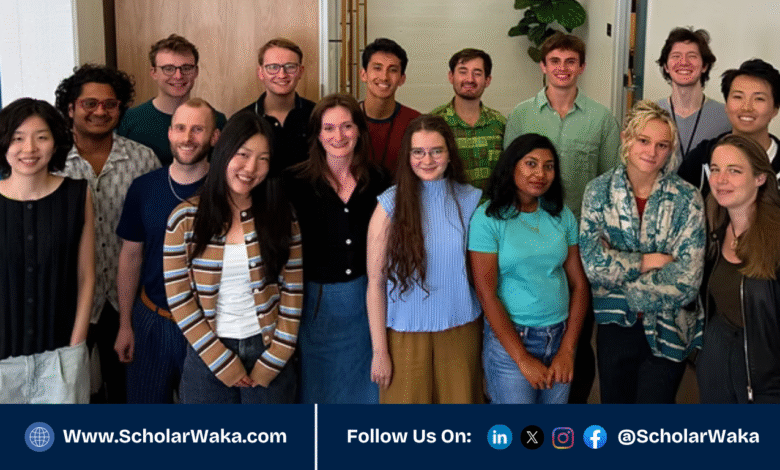
Applications for the 2026 Tarbell Fellowship closed on 7 January 2026, and the selected cohort is already moving through the programme — their week-long summit in the San Francisco Bay Area just wrapped up on 21 August, with nine-month newsroom placements beginning next month. One correction worth making upfront: this isn’t a UK-based fellowship, despite how it’s sometimes listed.
Don’t Miss: Top Fully Funded Scholarships for International Students
The Tarbell Center for AI Journalism is a US-based non-profit, and placements run across multiple global cities — San Francisco, New York, Washington DC, London, and Hong Kong among them — not a single UK host. This is a genuinely well-funded, highly structured programme for journalists who want to specialise in covering artificial intelligence specifically, built around embedding fellows inside major newsrooms like Bloomberg,
The Guardian, and Time rather than teaching journalism generally. This guide covers exactly who the programme is looking for, what the full year actually involves, and what to prepare now for the next application window.
Also, Check Out: Top Fully Funded Master’s Scholarships in Europe
What Tarbell Is Actually Trying to Build
Understanding the organisation’s mission changes how you should approach an application. Tarbell frames its purpose around a specific concern: as AI systems grow more powerful and more consequential, from enabling sophisticated cyberattacks to strengthening authoritarian surveillance, the journalists covering that shift need genuine technical fluency, not just general tech-beat familiarity.
Also Read: How to Write a Personal Statement for Scholarship | Tips and Free Template
That’s why the fellowship isn’t simply a placement scheme — it opens with a full 10-week AI Journalism Fundamentals course before any newsroom work begins, ensuring fellows arrive at their host outlet with real grounding in AI governance, ethics, and reporting technique rather than learning on the job from scratch.
Tarbell is also explicit about editorial independence: while the organisation is funded by outside donors, it states clearly that donors have no involvement in selecting fellows and no influence over the content or framing of fellows’ reporting, which matters if you’re weighing how much editorial freedom you’d actually have during a placement at a major outlet.
Tarbell AI Journalism Fellowship Summary
| Scholarship Name ⇒ | Tarbell AI Journalism Fellowship |
| Host Country ⇒ | USA |
| Study Level ⇒ | Fellowships |
| Benefits ⇒ | $60,000–$110,000 stipend, full training, summit, mentorship, visa support in some cases |
| Funded by ⇒ | Tarbell Center for AI Journalism |
| Eligible Countries ⇒ | All countries |
| Application Deadline ⇒ | 2026 cycle closed 7 January 2026. Based on the previous cycle’s timing, the 2027 application window is expected to open around November 2026 |
What a Full Year Actually Includes
The programme runs across three distinct phases, and understanding that structure matters more than treating it as a single undifferentiated “fellowship.”
- Newsroom placement: nine months embedded full-time at a major outlet — Bloomberg, The Guardian, NBC News, Time Magazine, MIT Technology Review, and The Verge have all hosted fellows previously — covering AI, technology, governance, and society as genuine reporting work, not observation
- Stipend: $60,000 to $80,000 for early-career fellows depending on placement location, rising to $90,000 to $110,000 for Senior Fellows with five or more years of relevant experience
- AI Journalism Fundamentals course: a 10-week programme covering AI governance, ethics, and reporting technique, delivered remotely before newsroom placements begin
- Bay Area summit: a fully funded, in-person week of workshops, expert speakers, and networking held in the San Francisco Bay Area, with all travel and accommodation costs covered by Tarbell
- Mentorship and networking: structured connections with experienced journalists and access to a global network of AI reporters throughout the programme, not limited to the summit week
- Visa support: available for some placements depending on location, which is worth clarifying directly with Tarbell if your eligibility to work in a specific host country is uncertain
Eligibility Requirements
- You need a genuine, demonstrated interest in journalism — previous newsroom experience helps but isn’t required to apply
- You need a deep, real interest in artificial intelligence and its effects on society, not simply general curiosity about technology
- You need strong writing skills and a demonstrated ability to break complex ideas down clearly for a general audience
- You need genuine willingness to work hard in a fast-paced newsroom environment, ask questions freely, and take feedback as part of growth rather than criticism
- Applicants from every country are eligible, though some newsroom placements specifically require the right to work in the UK or the US, which is worth checking against your own visa situation before applying
- Senior Fellow roles require at least five years of full-time experience in journalism or AI specifically — early-career applicants without that experience should apply for the standard fellowship track instead
- Tarbell explicitly states that candidates who don’t meet every listed point but believe they can genuinely contribute are encouraged to apply anyway
How Selection Actually Works
The process runs in three distinct stages rather than a single application review. The first stage — filling in the online form, uploading your CV, answering short questions, and submitting one to three writing samples — is designed to take an hour or less, so treat it as a genuine first filter rather than a formality.
Applicants who clear that stage move to a newsroom-style work test lasting two to four hours, testing actual reporting and storytelling skills under realistic conditions rather than abstract questions. The final stage combines an interview with the Tarbell team and one to three interviews with potential host newsroom partners, meaning your eventual placement outlet has direct input into selecting you, not just Tarbell alone. Fellows are typically confirmed by the end of the following month after applications close.
Required Documents
To apply for the Tarbell AI Journalism Fellowship ($60,000–$110,000 stipend), you will need to prepare materials across two main phases.
Initial Application Stage
- CV or Resume: A current document detailing your journalistic track record, newsroom experience (including student media), or relevant background in fields like AI governance, computer science, or law.
- 1 to 3 Writing Samples:
- Clips or samples demonstrating strong analytical or investigative capability. They do not strictly have to be about AI, but they should highlight your ability to handle complex topics under deadline.
- Total combined word count limit is typically capped at around 4,500 words. Unpublished work or draft clips are accepted.
- Short Application Answers: Responses addressing your motivation, placement preferences, background with technology/journalism, and how you approach complex or controversial topics.
- Multiple-Choice Section & Placement Matching: Preferences regarding host newsroom locations and interest areas (e.g., policy, technical analysis, labor, accountability).
Later Evaluation & Selection Stages
- Work Test Deliverables (Late Stage): If shortlisted, you will complete a timed 2-to-3-hour practical reporting and writing task designed to test your ability to synthesize technical AI topics for a newsroom setting.
- Identification & Right-to-Work Documents: Government-issued ID (Passport/National ID) and proof of employment authorization for host newsroom countries (primarily US or UK, though visa assistance is supported for select placements).
- References: Professional or academic contacts who can vouch for your reporting ability, work ethic, and analytical skills (requested prior to newsroom matching interviews).
How to Apply
The application is done in stages. Here is how it works:
Step 1: Application and Writing Samples (60 minutes or less)
You will fill out the online form, upload your CV, answer short questions, and submit one to three writing samples.
Step 2: Work Test (2 to 4 hours)
Applicants who pass the first stage will complete a newsroom-style work task to test reporting and storytelling skills.
Step 3: Interviews (2 to 4 hours)
You will have an interview with a member of the Tarbell team and one to three interviews with potential newsroom partners.
Selected fellows then begin training in June 2026.
Getting Ready for the Next Cycle
Since the 2026 cycle has closed and its fellows are already moving into their newsroom placements, use the coming months to strengthen exactly what the first application stage checks for. Build or refresh a small set of writing samples that specifically demonstrate your ability to explain complex, technical ideas clearly — general writing samples are less persuasive here than pieces that show genuine engagement with AI or technology topics specifically.
If you’re missing direct newsroom experience, that’s explicitly not disqualifying, but strengthening your demonstrated interest in AI’s societal impact through independent writing, research, or related work gives the selection committee something concrete to evaluate. Watch Tarbell’s official fellowship page for the 2027 cycle, expected to open around November 2026 based on the previous year’s timing.
Frequently Asked Questions
Is the Tarbell Fellowship based in the UK?
No. Tarbell Center for AI Journalism is a US-based non-profit, and placements span multiple global cities including San Francisco, New York, Washington DC, London, and Hong Kong, not a single UK location.
Is the 2026 Tarbell Fellowship still accepting applications?
No. The 2026 cycle closed on 7 January 2026. The selected cohort’s summit already took place in August 2026, and newsroom placements begin next month. Based on the previous cycle’s timing, the 2027 window is expected to open around November 2026.
Do I need previous newsroom experience to apply?
No. Previous newsroom experience is helpful but explicitly not required. Tarbell encourages applicants who don’t meet every listed criterion but believe they can genuinely contribute to apply anyway.
What’s the difference between the standard fellowship and the Senior Fellow track?
Senior Fellow roles require at least five years of full-time experience in journalism or AI specifically, and carry a higher stipend of $90,000 to $110,000, compared to $60,000 to $80,000 for the standard early-career track.
Will Tarbell sponsor my visa if I’m placed outside my home country?
Visa support is available for some placements depending on location, but it isn’t guaranteed across every host outlet. Confirm this directly with Tarbell based on your specific situation and the placement you’re being considered for.
Disclaimer: All fellowship details, deadlines, and eligibility criteria in this post were verified from official Tarbell Center for AI Journalism sources as of August 2026. Information is subject to change without notice. Always confirm the latest details directly on the official Tarbell Fellowship website before submitting your application. ScholarWaka is not affiliated with the Tarbell Center for AI Journalism.
Official Application Portal
Join ScholarWaka Community
Get the latest scholarship updates and study abroad opportunities before anyone else.