Chinese Academy of Agricultural Sciences (CAAS) Scholarship 2026 in China

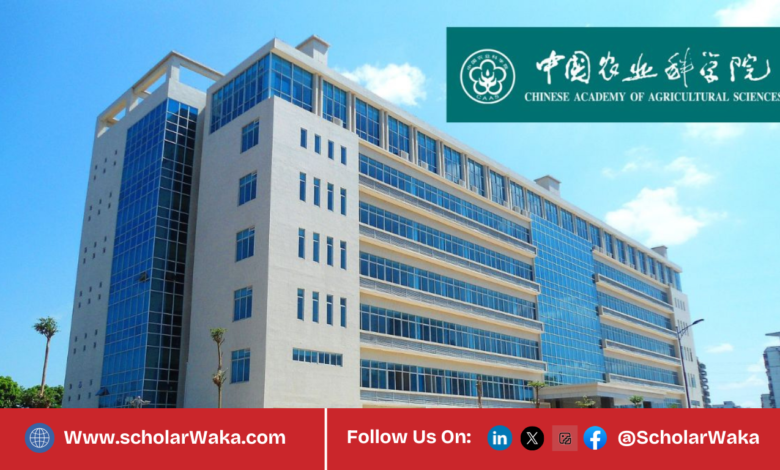
Both application windows for the Chinese Academy of Agricultural Sciences (CAAS) Scholarship 2026 cohort have now officially closed. The first deadline for candidates applying through the Chinese Government Scholarship (CGS) pathway closed on 31 March 2026, while the direct Graduate School of CAAS (GSCAAS) application portal closed on 30 April 2026. Admitted postgraduate students and visiting scholars are currently finalizing travel logistics ahead of mandatory on-campus registration, scheduled for 1 to 5 September 2026 in Beijing.
Don’t Miss: Top Fully Funded Scholarships for International Students
As one of Asia’s premier agricultural research institutions, CAAS offers fully funded Master’s and Doctoral degree tracks that combine rigorous coursework with hands-on research in state-of-the-art laboratories. Beyond the primary government and institutional awards, CAAS also co-hosts specialized funding streams—such as the joint GSCAAS-OWSD Fellowship, specifically tailored for women scientists from Science and Technology Lagging Countries (STLCs).
For international students planning ahead for the 2027 academic intake, understanding the distinct application routes, stipend tiers, and supervisor acceptance procedures is essential for preparing a competitive file ahead of the portal reopening in late 2026. Information verified August 2026 from official GSCAAS administrative disclosures.
Also, Check Out: Top Fully Funded Master’s Scholarships in Europe
Two Separate Scholarship Pathways, Not One
The Graduate School of the Chinese Academy of Agricultural Sciences (CAAS) serves as the academic arm of China’s leading national research organisation for agricultural science and technology transfer. CAAS has also held approval as a Chinese Government Scholarship-granting institution since 2007. What most coverage of this opportunity misses is that GSCAAS actually runs two distinct scholarship routes in parallel, each with its own deadline, its own funding source, and its own eligibility nuance.
Also Read: How to Write a Personal Statement for Scholarship | Tips and Free Template
The first route is the Chinese Government Scholarship (CGS) Type B — the University Programme, where GSCAAS itself reviews and recommends candidates directly to the China Scholarship Council. The second is GSCAAS’s own institutional scholarship (GSCAASS), funded and administered by the Graduate School itself rather than the national CSC system.
Critically, these two routes are mutually exclusive: students who have already received a Chinese Government Scholarship or a Beijing municipal scholarship are not eligible for GSCAAS’s own scholarship. Because the CGS route operates under a limited quota specifically for Master’s applicants, GSCAAS has actively encouraged Master’s-level applicants to also consider applying through the Bilateral CGS Programme via their home country’s Chinese embassy, which runs as a separate track from both routes covered here.
Chinese Academy of Agricultural Sciences Scholarship Summary
| Scholarship Name ⇒ | Chinese Academy of Agricultural Sciences |
| Host Country ⇒ | China |
| Study Level ⇒ | Masters |
| Benefits ⇒ | Tuition waiver, free dormitory accommodation, monthly research assistantship (3,000–3,500 RMB), comprehensive medical insurance |
| Funded by ⇒ | Graduate School of Chinese Academy of Agricultural Sciences (GSCAAS) |
| Eligible Countries ⇒ | All countries |
| Application Deadline ⇒ | Chinese Government Scholarship applicants: closed March 31, 2026. GSCAAS’s own scholarship applicants: closed April 30, 2026. Both have passed; registration for the autumn 2026 semester runs September 1–5, 2026 |
What the Scholarship Provides
GSCAAS’s own institutional scholarship (as distinct from the CGS route, which follows the broader national CSC benefits structure) covers:
- A fee waiver for tuition and basic textbooks — costs for experiments or internships beyond the standard programme curriculum, and any learning materials beyond required basic textbooks, remain the student’s own responsibility
- Free on-campus dormitory accommodation, supported directly by your GSCAAS supervisor
- A monthly research assistantship: 3,000 RMB for Master’s students and Visiting Scholars, or 3,500 RMB for Doctoral students and Senior Scholars, also supported by your supervisor
- Comprehensive medical insurance, with the fee covered directly by GSCAAS
- A living allowance that continues for 15 days after your graduation date, and which covers standard school holidays, with reimbursement available for scholarship students who miss allowance payments during holiday periods and later return to campus
Worth noting: the university may suspend your allowance for at least one month if you fail to register on time without prior written permission, take leave for non-health-related reasons, or remain absent from the university for more than one month. Administrative compliance therefore affects your ongoing funding, not just your initial eligibility.
Eligibility Requirements
Eligibility varies by which of four academic categories you’re applying under:
- All applicants must be non-Chinese citizens, in good health, and willing to comply with Chinese laws and regulations
- Master’s applicants must hold a Bachelor’s degree and be under 35 years old
- Doctoral applicants must hold a Master’s degree and be under 40 years old
- General Scholars must have completed at least two years of undergraduate study and be under 45 years old
- Senior Scholars must hold a Master’s degree or higher, or an associate professor title or above, and be under 50 years old
- All applicants must meet English and/or Chinese language proficiency requirements, depending on whether their chosen programme is taught in English or bilingually
There’s also a specific scholarship track reserved exclusively for women pursuing PhD research in natural sciences, engineering, or information sciences, specifically targeted at applicants from countries the programme classifies as Science and Technology Lagging Countries (STLCs). If you’re a woman researcher in one of these fields from an eligible country, this dedicated track is worth investigating separately, since it operates under its own specific criteria distinct from the general Doctoral pathway.

Required Documents
To be considered for admission and funding at the Graduate School of the Chinese Academy of Agricultural Sciences (GSCAAS), applicants must submit a complete, verified digital application package through the official online portal. All materials not issued in English or Chinese must be accompanied by an official, notarized translation.
- Completed GSCAAS Application Form: Filled out and submitted online via the GSCAAS International Student Portal.
- Valid Ordinary Passport: High-resolution scan of the passport identification page, showing at least two years of remaining validity from the submission date.
- Notarized Highest Diploma & Transcripts: Official graduation certificates and complete, year-by-year academic transcripts for all completed university degrees (Bachelor’s for Master’s candidates; Master’s for Doctoral candidates).
- Two Academic Letters of Recommendation: Signed reference letters issued by professors or associate professors in the applicant’s field, detailing academic performance and research capability.
- Detailed Curriculum Vitae (CV): Chronological outline of educational background, scientific research experience, technical skills, and academic achievements.
- Comprehensive Research Proposal: A structured study or research plan (typically 500+ words for postgraduates) detailing research objectives, methodology, and alignment with CAAS research laboratories.
- Language Proficiency Certificate: Proof of language competence, such as IELTS (5.5+), TOEFL iBT (70+), or an official English Proficiency Certificate issued by the previous university. For Chinese-taught programs, HSK results are required.
- Academic Thesis Abstract & Publications: Copies of published journal papers, conference articles, or the abstract and contents page of the applicant’s degree thesis.
- Verification of Employment / No Objection Certificate (NOC): An official statement from a current employer (if employed) granting permission for full-time study leave.
- Foreigner Physical Examination Form: Completed in English by a licensed physician, accompanied by laboratory blood test reports. The physical checkup, official hospital stamp, and doctor’s signature must be dated within six (6) months of application.
- Certificate of Non-Criminal Record: Official police clearance certificate issued by local security or government authorities in the applicant’s home country, dated within six (6) months of submission.
- Supervisor Provisional Acceptance Letter: An official acceptance letter issued by a certified GSCAAS professor or Principal Investigator.
Application Deadline
For the 2026 cycle, Chinese Government Scholarship applications closed March 31, 2026, and GSCAAS’s own scholarship applications closed April 30, 2026 — both now closed. Registration for students admitted for the autumn 2026 semester runs September 1 to 5, 2026, just weeks from now.
GSCAAS typically accepts scholarship applications for each upcoming academic year between January and April. Applicants targeting the 2027 cycle should expect a similar application window, but they should confirm the exact dates in GSCAAS’s annual admission guidelines once published.
How to Apply for the Next Cycle
Both 2026 windows are closed, but the process has followed a consistent annual structure:
- Browse the CAAS supervisor list across its 34 participating institutes and identify a potential supervisor whose research area matches your intended field of study.
- Reach out to your chosen supervisor directly, since securing a preliminary acceptance letter, while optional, strengthens your application meaningfully.
- Complete the GSCAAS online application system, along with the separate CSC online application form (Agency No. 82101) if you’re pursuing the Chinese Government Scholarship route specifically.
- Upload all required supporting documents, including your notarized diploma, transcripts, recommendation letters, research proposal, and non-criminal record report.
- If applying for the Chinese Government Scholarship, note that Master’s applicants specifically face a limited GSCAAS quota, and are encouraged to also pursue the Bilateral CGS Programme through their home country’s Chinese embassy as an alternative or additional route.
- Submit your application by the relevant deadline for your chosen track — historically March 31 for CGS applicants, April 30 for GSCAAS’s own scholarship applicants.
- Once admitted, register within the specified registration window — March 4–9 for spring semester entry, or September 1–5 for autumn semester entry — or request written permission from GSCAAS in advance if you’re unable to register on time.
Frequently Asked Questions
Is the CAAS Scholarship still accepting applications for 2026?
No. Both application deadlines — March 31 for Chinese Government Scholarship applicants and April 30 for GSCAAS’s own scholarship applicants — have passed. Registration for the autumn 2026 semester runs September 1 to 5, 2026.
What’s the difference between the Chinese Government Scholarship route and GSCAAS’s own scholarship?
The Chinese Government Scholarship route has GSCAAS review and recommend your application to the national China Scholarship Council. GSCAAS’s own scholarship is funded and administered entirely by the Graduate School itself. The two are mutually exclusive — you cannot hold both simultaneously.
Can I apply for GSCAAS’s scholarship if I already received a Chinese Government or Beijing municipal scholarship?
No. Applicants who have already received either of these are not eligible for GSCAAS’s own institutional scholarship.
Is there a scholarship specifically for women researchers?
Yes. GSCAAS offers a track reserved specifically for women pursuing PhD research in natural sciences, engineering, or information sciences, targeted at applicants from countries classified as Science and Technology Lagging Countries.
Do I need a supervisor’s acceptance letter before applying?
It’s optional but preferred. Applicants who secure an acceptance letter from a CAAS professor or supervisor in advance are given preference during the review process, even though it isn’t a strict submission requirement.
How long does the programme take to complete?
Both Master’s and Doctoral programmes generally run three years, while Visiting Scholar placements typically last under two years.
Disclaimer: All programme details, deadlines, and eligibility criteria in this post were verified from official sources as of August 2026. Information is subject to change without notice. Always confirm the latest details directly on GSCAAS’s official website before applying. ScholarWaka is not affiliated with the Chinese Academy of Agricultural Sciences.
Official Application Portal
Join ScholarWaka Community
Get the latest scholarship updates and study abroad opportunities before anyone else.