UNIV’R Programme 2026 in France | How to Apply

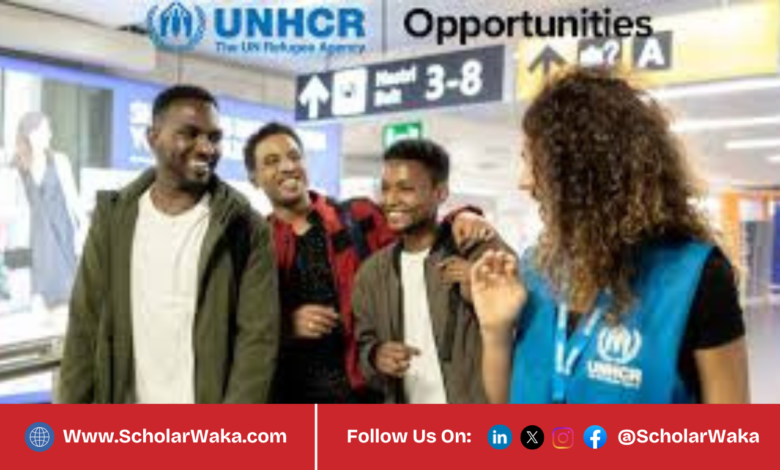
A specific and deliberate idea shapes this initiative: UNIV’R stands for “University Corridors for Refugees” and provides a structured pathway that removes the financial, legal, and logistical barriers that often make studying abroad nearly impossible for people who have already had to rebuild their lives once.
Don’t Miss: Top Fully Funded Scholarships for International Students
Run jointly by UNHCR, the Agence Universitaire de la Francophonie (AUF), and Campus France, it funds a full two-year Master’s degree for recognised refugees currently living in a first country of asylum outside the EU, and it removes essentially every practical obstacle along the way: tuition, living costs, travel, healthcare, and even the administrative maze of French visa paperwork.
The main application window closed on 15 March 2026, and the participating universities have already communicated their admission decisions and final scholarship outcomes to applicants. This guide covers who the programme genuinely targets, the separate and distinct Sciences Po pathway that runs on its own earlier deadline, what full funding actually includes, and what to prepare now if you’re aiming for the 2027/28 cohort.
Also Read: How to Write a Personal Statement for Scholarship | Tips and Free Template
UNIV’R Programme Summary
| Scholarship Name ⇒ | UNIV’R (University Corridors for Refugees) |
| Host Country ⇒ | France |
| Study Level ⇒ | Masters |
| Benefits ⇒ | Full Scholarship — living costs, travel, healthcare, visa fee exemption, tuition exemption, housing access |
| Funded by ⇒ | Campus France, UNHCR, and the Agence Universitaire de la Francophonie (AUF) |
| Eligible Countries ⇒ | Refugees residing in a first country of asylum outside the European Union |
| Application Deadline ⇒ | 15 March 2026, now closed |
What the UNIV’R Programme Involves
UNIV’R exists because UNHCR, AUF, and Campus France recognised that talented refugees living in first-asylum countries face a specific, compounding set of barriers to higher education, no financial means to pay international tuition, no legal pathway to travel or obtain a student visa, and often no institutional support to navigate a foreign university application process from a refugee camp or urban displacement setting.
Also, Check Out: Top Fully Funded Master’s Scholarships in Europe
The programme has now established its fifth cohort at Sciences Po and connects successful applicants with one of fourteen participating French higher education institutions, where they pursue a two-year Master’s degree taught in either French or English, depending on the specific programme. While the initiative primarily supports French-speaking refugees from Sub-Saharan Africa and the Middle East, given the AUF’s Francophone mission, it remains genuinely open to applicants of all nationalities who meet the criteria.
What the Separate Sciences Po Track Involves
This is worth knowing clearly, since it runs entirely differently from the general UNIV’R process. Sciences Po, one of France’s most selective institutions for social sciences and international affairs, runs its own dedicated UNIV’R pathway with a distinct, earlier deadline and a slightly different age limit: applicants can be up to 35 years old, rather than 30, and the deadline for Sciences Po specifically falls around 1 February, well ahead of the general 15 March cutoff.
If you’re specifically targeting one of Sciences Po’s roughly 30 Master’s tracks across its eight professional schools, you’d apply directly through the Sciences Po admissions platform, completing both a Sciences Po academic application and the UNIV’R scholarship form together, rather than solely through the general UNHCR platform used for the other thirteen participating institutions.

What Makes You Eligible for This Programme
- You need to be legally recognised as a refugee, either by your first host country or by UNHCR directly
- You need to reside in a first country of asylum, outside the European Union
- You need to be no more than 30 years old at the time of application, under the general UNIV’R track
- You need a degree at least equivalent to a Bachelor’s degree (Bac+3 level), in a field relevant to your intended Master’s programme
- You need B2-level proficiency in French, or B2-level English if you’re applying to a programme taught in English
- Asylum seekers whose refugee status recognition process is still ongoing are not eligible; the status needs to be formally confirmed, not pending
What This Programme Actually Covers
- A scholarship covering living costs for the full duration of your Master’s degree
- Travel costs to and from France
- Social security and healthcare coverage
- Full exemption from visa fees
- Full exemption from tuition fees
- Administrative support throughout your studies, helping navigate the logistics of settling into life and study in France
- Access to student housing
What Your Visa and Post-Graduation Options Actually Look Like
You’ll arrive in France on a long-stay visa equivalent to a residence permit (VLS-TS), and it’s worth understanding two practical realities of this visa upfront. First, it’s strictly individual; it does not allow for family reunification, meaning your immediate family members cannot join you in France under this specific visa route during your studies.
Second, once you graduate, you can apply for a one-year residence permit specifically to search for employment in France, but there’s no guarantee this leads to permanent residence; it’s a job-search window, not an automatic pathway to settling permanently.
What Documents You Need to Prepare
- Proof of your refugee status, translated into French or English
- Your language proficiency certificate, at B2 level, matching your intended programme’s language of instruction
- A current CV
- A motivation letter
- Letters of recommendation
- The completed application form, submitted through UNHCR’s dedicated platform
Before you begin, keep two practical details in mind: you cannot save the online application form partway through, so you should prepare every required document before you start filling it in. You may also select up to two Master’s programmes from the participating universities within a single application.
What the Application Process Requires
- Confirm your refugee status is formally recognised, not still pending through an ongoing asylum process
- Prepare every required document in advance—including your translated proof of refugee status, language certificate, CV, motivation letter, and recommendation letters—as you cannot save the online application form and resume it later.
- Access the official application form through UNHCR’s dedicated platform
- Select up to two Master’s programmes from the list of participating institutions
- Complete every section of the form carefully and in full, since incomplete applications risk rejection
- Submit your single application before 15 March 2026, 23:59 Paris time. Do not submit more than one application form, as the selection committee will consider only a single submission.
- Some participating institutions require a separate, direct admission application to the specific Master’s programme itself, alongside your UNIV’R scholarship application — check this requirement carefully for your chosen institutions
- Wait to be contacted by the relevant university if you’re selected
What the Deadline and Selection Timeline Look Like
- General UNIV’R application deadline: 15 March 2026, 23:59 Paris time — now closed
- Sciences Po-specific deadline: Around 1 February 2026 — an earlier, separate deadline for that specific institution’s track
- University admission decisions: Announced around 23 April 2026
- Final scholarship decisions: Communicated in early May 2026
- Programme start: September 2026, for all successful candidates across this cohort
- Candidates who don’t hear back by early-to-mid summer following the deadline should generally consider their application unsuccessful for that cycle
- Next expected cycle: Based on the programme’s consistent annual pattern, expect the 2027/28 general application window to open with a similar mid-March deadline, and the Sciences Po track to open with its own earlier deadline around late January to early February 2027
What to Do Before the Next Cycle Opens
- Confirm your refugee status recognition is fully complete well ahead of the next application window, since ongoing or pending asylum processes disqualify you at this stage
- Begin or continue building your French or English language proficiency toward B2 level now, since this is a firm requirement tied directly to your intended programme’s teaching language
- Research the full list of fourteen participating institutions and their specific Master’s programmes in depth, since you can select up to two, and a well-matched, well-justified choice strengthens your application considerably
- If Sciences Po is your target, note its earlier deadline and higher age limit specifically, and plan your application timeline around February rather than March
- Draft your motivation letter well in advance, since this is where your academic aspirations and personal journey as a refugee genuinely need to come together persuasively within the application
Frequently Asked Questions
Is the UNIV’R Programme still accepting applications for 2026/27?
No. The general deadline was 15 March 2026, and Sciences Po’s separate track closed even earlier, around 1 February 2026. University admission and scholarship decisions have already been communicated for this cycle.
Can asylum seekers whose status is still being processed apply?
No. Your refugee status needs to be formally and legally recognised, either by your host country or by UNHCR, before you apply. A pending asylum process doesn’t meet this requirement.
Can my family join me in France under this scholarship’s visa?
No. The long-stay visa (VLS-TS) you receive is strictly individual and does not permit family reunification during your studies.
What happens after I graduate — can I stay in France permanently?
You can apply for a one-year residence permit specifically to search for a job, but this doesn’t guarantee permanent residence afterwards.
Is the age limit the same for every participating institution?
No. The general UNIV’R track sets a limit of 30 years old, while the separate Sciences Po track allows applicants up to 35 years old.
Disclaimer: All programme details and figures in this post are verified from official UNHCR, Campus France, and AUF sources as of July 2026. Information is subject to change without notice. Always confirm the latest details directly on the official UNHCR UNIV’R programme page. ScholarWaka is not affiliated with UNHCR, Campus France, or the Agence Universitaire de la Francophonie.
Official Application Portal
Join ScholarWaka Community
Get the latest scholarship updates and study abroad opportunities before anyone else.