Clarendon Scholarships 2026 at the University of Oxford | Fully Funded

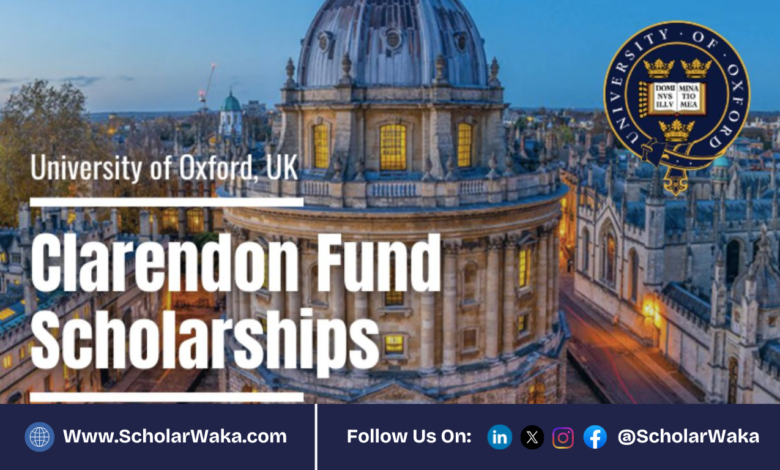
Here’s a genuinely striking number: more than 200 new, fully funded graduate scholarships are awarded every year, across every subject, to applicants of any nationality, with no separate application required. That’s the Clarendon Fund, and 2025/26 marked its 25th intake since the scheme launched in 2001 — a quarter century of funding without interruption.
Also, Check Out: Top Fully Funded Master’s Scholarships in Europe
The 2026-27 admissions cycle has closed (deadlines fell on December 2, 2025, or January 8, 2026, depending on course), and final funding decisions were confirmed between April and June 2026. If you’re planning an Oxford graduate application for 2027-28, the single most important thing to understand about Clarendon is this: there’s no scholarship deadline separate from your course deadline, and missing your course deadline means missing the scholarship entirely, no exceptions.
Also Read: How to Write a Personal Statement for Scholarship | Tips and Free Template
Twenty-Five Years of Oxford’s Largest Graduate Scholarship Scheme
The Clarendon Fund launched in 2001 and has grown substantially since, from roughly 100 to 140 scholarships in earlier years to over 200 new awards for the 2026-27 cycle alone. It functions as Oxford’s flagship graduate funding scheme specifically because of its scale and reach — genuinely open across every subject and division at the university, with no restrictions tied to nationality, field of study, or ordinary residence. Clarendon Scholars also join what the Fund describes as one of Oxford’s most active, internationally diverse, and multidisciplinary communities, extending well beyond the funding itself into a genuine cross-departmental network of scholars.
Don’t Miss: Top Fully Funded Scholarships for International Students
What makes Clarendon distinct from most named scholarships is precisely its lack of a separate identity in the application process. There’s no essay, no additional form, and no dedicated portal — it’s woven directly into Oxford’s standard graduate admissions pipeline, meaning every one of the thousands of graduate applicants to Oxford each year is automatically screened for Clarendon consideration as part of the ordinary admissions review.
Clarendon Scholarships at the University of Oxford Summary
| Scholarship Name ⇒ | Clarendon at the University of Oxford |
| Host Country ⇒ | UK |
| Study Level ⇒ | Master’s and PhD |
| Benefits ⇒ | Full tuition and college fees, plus an annual living expenses grant (at least £18,622 as of the 2023-24 rate, adjusted annually) |
| Funded by ⇒ | University of Oxford |
| Eligible Countries ⇒ | All countries |
| Application Deadline ⇒ | 2026-27 cycle closed December 2, 2025, or January 8, 2026, depending on course. The 2027-28 cycle’s deadlines will fall in December 2026 or January 2027 |
Eligibility Requirements
To be automatically considered for a Clarendon Scholarship, applicants generally need to meet the following:
- You must apply for a new Master’s or DPhil degree at the University of Oxford
- You must submit your application by the December or January admissions deadline specific to your course — Oxford’s later March round is not eligible for Clarendon consideration, consistent with how the university’s other automatic scholarships handle this same distinction
- Your course must be a degree-bearing graduate programme — Postgraduate Certificate and Postgraduate Diploma courses are not eligible
- All subject areas across the university are eligible, with no restrictions by discipline
- Applicants of all nationalities are eligible, with no restrictions based on country of residence
- If you’re currently studying a Master’s at Oxford, you may still apply for Clarendon if you’re starting a genuinely new DPhil or a second Master’s — but current students continuing the same degree they’re already enrolled in are not eligible
- Deferred offer holders are not eligible for Clarendon consideration in the cycle they defer into
Because Clarendon rides entirely on your course application timing, the single biggest risk to your eligibility isn’t your academic profile — it’s submitting after your specific course’s December or January deadline, even by one day.
How Selection Actually Works
Clarendon’s selection process runs through several internal stages rather than a single review. Departmental academics first review graduate applications for both admission and scholarship potential. Departments then nominate their top candidates to their academic division. Divisions shortlist nominees based on academic merit and future potential. The Clarendon Fund Administrator then issues initial scholarship offers, known as CB1 letters, with final, confirmed funding packages — CB2 letters — following between April and June. A small number of late nominations can still occur over the summer, specifically when previously selected scholars withdraw and their funding becomes available to redistribute.
Because this process moves through department, then division, then the central Fund administrator, there’s no single point of contact or application status you can check independently — your scholarship consideration is embedded entirely within your ordinary admissions timeline, and updates arrive through the same channels as your admissions decision.

What the Scholarship Provides
Benefits are structured differently depending on whether you’re studying full-time or part-time:
For full-time students:
- Full coverage of course fees, for both Home and Overseas fee status students
- An annual living expenses grant at least equal to the UKRI minimum doctoral stipend rate — confirmed at a minimum of £18,622 for the 2023-24 academic year, with the rate adjusted annually in line with the UKRI figure, so confirm the current year’s exact amount directly on Oxford’s Clarendon Fund page
For part-time students:
- Full coverage of course fees
- A study support grant to help with non-fee costs, rather than a full living expenses grant
- Study support grants set at a sixth, a third, or half of the UKRI minimum doctoral stipend, with the exact proportion depending on your specific course’s structure and duration
Scholarships normally cover a scholar’s full period of fee liability — the length of time you’re liable to pay course fees. In some cases, academic divisions may approve additional funding beyond that period at their discretion, though only a living expenses grant is paid during that extra time, not continued fee coverage.
Required Documents
There is genuinely nothing extra to prepare specifically for Clarendon:
- No additional documents are required beyond your standard Oxford graduate course application
- Whatever documents your specific Master’s or DPhil course requires — transcripts, references, a research proposal, and so on — serve as your complete Clarendon consideration as well
This is one of the very few major scholarships where the advice genuinely is “just apply well to your course” — there’s no separate document checklist to track down.
How to Apply for the Next Cycle
The 2026-27 cycle is closed, but the process for 2027-28 follows the exact same structure Clarendon has used consistently since 2001:
- Choose an eligible Master’s or DPhil course at the University of Oxford, confirming it’s a degree-bearing programme rather than a Postgraduate Certificate or Diploma.
- Identify your specific course’s funding deadline, either in December 2026 or January 2027, listed directly on that course’s Oxford admissions page.
- Submit a complete, strong application by that deadline, including all required course application materials — there’s no separate Clarendon form to complete alongside it.
- Your application is then automatically considered for Clarendon as part of Oxford’s standard graduate admissions review.
- Wait for your department’s nomination decision, followed by divisional shortlisting, and initial CB1 offer letters from the Clarendon Fund Administrator if selected.
- Await your final, confirmed CB2 funding letter, typically issued between April and June following your application.
Application Deadline
The 2026-27 cycle’s deadlines fell on December 2, 2025, or January 8, 2026, depending on your specific course, and have now passed, with final CB2 funding confirmations issued between April and June 2026. For the 2027-28 cycle, deadlines will again fall in either December 2026 or January 2027, tied to each individual course’s own admissions timeline.
Because Clarendon has no deadline of its own — it is entirely defined by your course’s deadline — the practical move for anyone planning ahead is to identify your specific target course’s page on Oxford’s website now, note whichever of the two possible deadlines applies, and treat that date as absolutely firm.
Frequently Asked Questions
Is the Clarendon Scholarship still accepting applications for 2026-27?
No. The 2026-27 cycle’s deadlines, December 2, 2025, or January 8, 2026 depending on course, have passed, with final funding decisions confirmed by June 2026. The next cycle’s deadlines fall in December 2026 or January 2027.
How many Clarendon Scholarships are awarded each year?
Over 200 for the 2026-27 cycle, a substantial increase from roughly 140 in earlier years, marking the Fund’s continued growth since its 2001 launch.
Do I need to submit a separate application for Clarendon?
No. There is no separate scholarship application. Every eligible applicant who applies for a new Master’s or DPhil course by their course’s December or January deadline is automatically considered.
What happens if my course application is only reviewed in Oxford’s later March admissions round?
You lose Clarendon eligibility for that cycle. Only applications submitted and complete by the earlier December or January deadline for your specific course are considered — this mirrors how several of Oxford’s other major scholarships handle the same distinction.
Can current Oxford students apply for Clarendon?
Only in specific circumstances. Students currently studying a Master’s at Oxford may apply if they’re starting a genuinely new DPhil or a second Master’s, but students continuing the same degree they’re already enrolled in are not eligible.
Is Clarendon available for Postgraduate Certificate or Diploma courses?
No. Only degree-bearing graduate programmes, both full-time and part-time Master’s courses and all DPhil courses, are eligible.
Disclaimer: All programme details, deadlines, and eligibility criteria in this post were verified from official sources as of August 2026. Information is subject to change without notice. Always confirm your specific course’s exact funding deadline and the current living expenses grant rate directly on the University of Oxford’s official Clarendon Fund page before applying. ScholarWaka is not affiliated with the University of Oxford.
Official Application Portal
Join ScholarWaka Community
Get the latest scholarship updates and study abroad opportunities before anyone else.