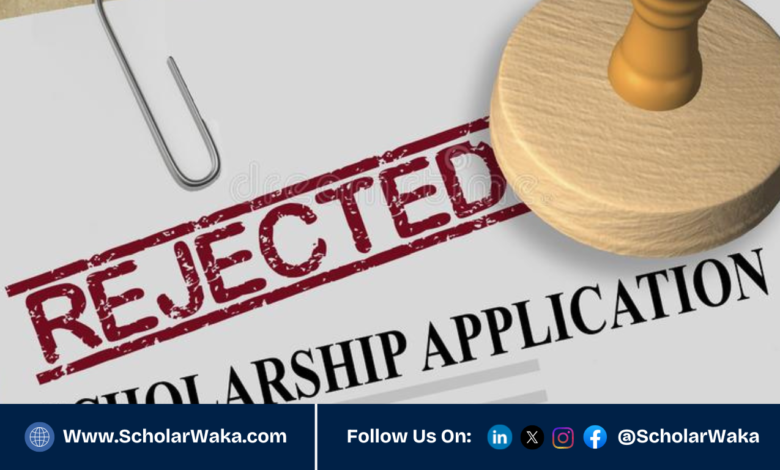
Common reasons scholarship applications fail have surprisingly little to do with intelligence or potential. Every year, thousands of students apply with strong academic records and genuine need, and still get rejected — not because they weren’t qualified, but because of specific, avoidable mistakes in the process itself. A 2024 joint report by EducationData.org and the International Scholarship Council found that nearly 40% of scholarship applications are rejected for entirely preventable reasons. Understanding exactly what those reasons are is what actually improves your odds next time.
Not Meeting Eligibility Requirements
A significant share of rejections happen because applicants apply to scholarships they were never eligible for in the first place — mismatched nationality, academic level, age, field of study, or missing work experience requirements. These applications are typically rejected automatically, before anyone evaluates the essay or documents at all. Our guide on what scholarship committees look for breaks down the distinction between eligibility and selection criteria in more depth — confirming eligibility genuinely comes first, before anything else about your application matters.
Missing the Deadline
Late submission is one of the most common, and most avoidable, reasons for rejection. Jillian Perota, Assistant Director at St. John’s University’s Office of Undergraduate Admissions, put it directly in an interview with St. John’s own admissions blog: “Deadlines are critical markers for students to demonstrate responsibility and commitment. Missing one usually results in automatic disqualification.” Scholarship providers enforce these dates strictly, and a submission even minutes late is very often not reviewed at all, regardless of how strong it is.

Submitting an Incomplete Application
Missing documents — transcripts, certificates, recommendation letters, proof of enrolment — can cause immediate disqualification on their own. This is where timing catches many applicants off guard: transcripts can take two to six weeks to obtain, police clearances up to eight weeks, and recommendation letters need four to eight weeks of genuine lead time to be done properly, not rushed. Even optional documents, when included, can meaningfully strengthen an otherwise adequate application.
Weak or Generic Personal Statements
Many applicants submit an essay that could apply to any scholarship, rather than one written specifically for this one. A weak personal statement fails to clearly connect the applicant’s goals and achievements to the scholarship’s actual objectives — it reads as a summary of a CV rather than a genuine case for why this specific opportunity matters to this specific person.
Poor Grammar, Spelling, and Formatting
Errors in writing signal a lack of seriousness to a reviewer, even when the underlying content is strong. A polished application, in Perota’s words, “demonstrates that you are serious and prepared for the opportunity” — reviewers often have no way to distinguish carelessness from a genuine lack of preparation, so an unpolished submission gets read as the latter by default.
Failing to Follow Application Instructions
Ignoring word limits, required file formats, essay prompts, or document naming conventions can result in automatic rejection, entirely separate from the quality of the content itself. Scholarship committees processing hundreds or thousands of applications generally don’t have the resources to make exceptions for applicants who didn’t follow stated instructions precisely.
Weak Letters of Recommendation
Choosing a referee who doesn’t genuinely know you well, or failing to brief them properly on the scholarship’s focus and your specific goals, often produces a generic, unconvincing letter. A recommendation that could describe almost any student adds little real weight to an application, regardless of how prestigious the referee’s title is.
Lack of Genuine Research and Preparation
Applicants who don’t understand a scholarship’s actual mission and selection criteria struggle to present themselves as a strong match for it — even when they genuinely would be, on paper. Our guide on how to improve your next scholarship application after rejection covers this specific gap in more depth if you’ve faced this exact issue before.
How to Avoid These Mistakes
- Read and follow every application instruction precisely, without assuming a general process applies universally
- Start preparing well before the deadline, accounting for documents that take genuine time to obtain
- Submit every required document ahead of the closing date, not at the last possible moment
- Write a clear, honest personal statement specifically tailored to this scholarship’s actual mission
- Proofread your full application multiple times, ideally with a second set of eyes
- Choose referees who genuinely know you, and brief them properly on the scholarship and your goals
- Confirm your application genuinely aligns with the scholarship’s stated values, not just its funding amount
Frequently Asked Questions
What percentage of scholarship applications fail for preventable reasons?
Nearly 40%, according to a joint 2024 report by EducationData.org and the International Scholarship Council — meaning close to half of all rejections trace back to avoidable issues rather than a genuine lack of qualification.
How long should I budget for gathering scholarship documents?
Transcripts can take two to six weeks, police clearances up to eight weeks, and recommendation letters need four to eight weeks of genuine lead time. Start well ahead of your deadline, not in the final days.
Does poor formatting really affect scholarship outcomes?
Yes. Reviewers often can’t distinguish carelessness from unpreparedness, so a poorly formatted or unproofread application tends to be read as a lack of seriousness, regardless of the underlying content’s quality.
Can a strong candidate still be rejected for something unrelated to their qualifications?
Yes, frequently. Missed deadlines, incomplete documents, or failure to follow specific instructions can disqualify an otherwise genuinely strong candidate before a reviewer evaluates the substance of their application at all.
Should I use the same essay for multiple scholarship applications?
No. A generic essay reused across applications typically fails to connect to each scholarship’s specific mission, and reviewers can usually tell when an essay wasn’t written for their particular programme.
Join ScholarWaka Community
Get the latest scholarship updates and study abroad opportunities before anyone else.