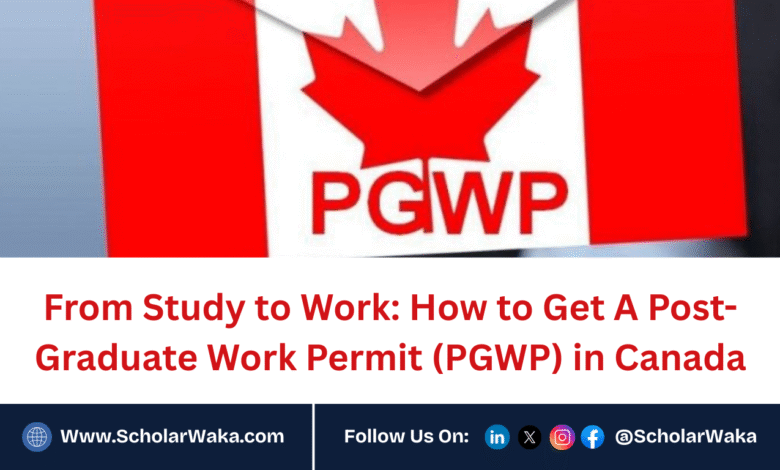
Getting a Post-Graduate Work Permit (PGWP) in Canada is a major milestone for international students — it lets you stay, gain real Canadian work experience, and potentially begin the path toward permanent residency. Your ability to work while studying is tied strictly to your study permit; once your programme ends, that permit expires, and understanding how to get a Post-Graduate Work Permit (PGWP) in Canada is what bridges you into your next stage. This guide covers eligibility, how to apply, and — critically — the significant rule changes IRCC introduced in November 2024 that many guides on this topic still don’t reflect.
Also Read: Complete List of Documents You Need for a UK Student Visa
What is PGWP?
A PGWP is an open work permit for international students who’ve completed an eligible programme at a Designated Learning Institution (DLI) in Canada. It lets you work for any employer, full-time or part-time, in any occupation — no job offer or LMIA required. IRCC created it specifically to help graduates build Canadian work experience, since that experience directly strengthens eligibility for permanent residency pathways like Express Entry or Provincial Nominee Programs.
One detail worth stating plainly, since it’s easy to miss: the PGWP is a one-time, lifetime benefit. There’s no renewal and no second PGWP for a later programme, regardless of how many degrees or diplomas you eventually complete in Canada.
Eligibility Requirements
The core structure hasn’t changed, but two genuinely significant requirements were added starting November 1, 2024, and remain fully in force through 2026, confirmed directly on IRCC’s own operational bulletin:
- Completed an eligible programme. At least 8 months long, at an eligible Designated Learning Institution, leading to a degree, diploma, or certificate.
- Maintained full-time student status throughout your programme, with limited exceptions.
- Held a valid study permit at some point during your academic programme.
- A language proficiency requirement, effective November 1, 2024. University bachelor’s, master’s, or doctoral graduates must demonstrate Canadian Language Benchmark (CLB) or NCLC level 7 across all four language areas — reading, writing, listening, and speaking. College and other non-university graduates need CLB or NCLC level 5. Your test results must be less than two years old at the time of application.
- A field-of-study requirement for non-degree programmes. If you applied for your study permit on or after November 1, 2024, and your programme isn’t a degree — a diploma, certificate, or post-graduate certificate — your specific programme’s CIP code must appear on IRCC’s published list of PGWP-eligible fields, tied to occupations facing long-term labour shortages. Degree graduates are exempt from this requirement entirely. This list has genuinely shifted more than once since 2024 — IRCC froze it for the entirety of 2026, so confirm your specific programme’s current status directly on IRCC’s own site rather than relying on an older list.
- Applied within 180 days of receiving your final transcript or official completion letter — miss this window by even a day, and IRCC will refuse your application.
- Completed most of your programme in person, not entirely through distance learning — IRCC has tightened restrictions on distance-learning eligibility as part of these same 2024 changes.

How Long a PGWP Lasts
Your PGWP’s length generally matches your programme’s duration, with one notable exception: Master’s graduates can receive up to 3 years, even if their programme itself was shorter than two years, provided it met the 8-month minimum. Regardless of programme length, your PGWP can never extend beyond your passport’s expiry date — if your passport expires before your permit would otherwise end, the permit is capped accordingly.
How to Apply for a PGWP
- Check your eligibility carefully, including the language and field-of-study requirements above — these are where recent applicants most often get tripped up.
- Gather your documents: your final transcript or official completion letter, a valid passport (covering at least the length of the PGWP you’re applying for), your study permit, and your language test results.
- Apply through IRCC’s online portal. Online applications process faster than paper ones, and current guidance increasingly points applicants toward online-only submission.
- Complete the application form carefully, ensuring every detail matches your study documents exactly.
- Pay the application fee online at submission.
- Submit within 180 days of your final transcript or completion letter — this deadline is firm, not flexible.
- Track your application status online while IRCC processes it; processing times vary by volume and time of year.
A Recent, Separate Update Worth Knowing
Separately from the PGWP itself, IRCC eliminated the standalone co-op work permit on April 1, 2026, simplifying work authorization for students in co-op or internship components of their programme — no separate application or fee required going forward. If you’re currently studying with a co-op component, this genuinely changes what you need to apply for during your programme, distinct from the PGWP process covered here.
Alternatives If You Don’t Qualify for a PGWP
Not every international student qualifies, and that doesn’t mean your path in Canada ends. Real alternatives include:
Employer-specific work permits, where a Canadian employer sponsors you, sometimes through the Labour Market Impact Assessment (LMIA) process.
Provincial Nominee Programs (PNPs), run independently by each province to attract skilled workers, offering a direct pathway to permanent residency if you studied and lived in that specific province.
Express Entry, Canada’s federal skilled worker system — a Canadian education genuinely boosts your Comprehensive Ranking System (CRS) score, even outside the PGWP pathway specifically.
Continuing your studies through another degree or diploma programme, which can extend your legal stay and potentially open PGWP eligibility later, provided the new programme itself qualifies.
A spousal open work permit, if your spouse or partner is studying or working in Canada under an eligible status.
Frequently Asked Questions
Do I need to take a language test for a PGWP now?
Yes, since November 1, 2024. University bachelor’s, master’s, or doctoral graduates need CLB/NCLC level 7 across all four language areas; college and other graduates need CLB/NCLC level 5. Results must be less than two years old.
Does the field-of-study requirement apply to everyone?
No. It applies only to non-degree programmes — diplomas, certificates, and post-graduate certificates — where your study permit was applied for on or after November 1, 2024. Degree graduates are exempt from this rule.
Can I get more than one PGWP if I complete multiple programmes in Canada?
No. The PGWP is a one-time, lifetime benefit. There’s no renewal and no second PGWP for a later programme, regardless of how many qualifications you eventually complete.
How long does a PGWP typically last?
It generally matches your programme’s length, except that Master’s graduates can receive up to 3 years even for a programme shorter than two years. Your PGWP can never extend beyond your passport’s expiry date, regardless of programme length.
What happens if I miss the 180-day application window?
IRCC will refuse your application, even if you’re a single day late. This deadline is calculated from the date of your final transcript or official completion letter, not your graduation ceremony date.
Disclaimer: PGWP eligibility rules, including the language and field-of-study requirements, were verified directly against IRCC’s official operational bulletin and current guidance as of mid-2026. These rules have changed significantly since 2024 and continue to be updated — always confirm current requirements directly on canada.ca before applying.
Join ScholarWaka Community
Get the latest scholarship updates and study abroad opportunities before anyone else.