Padua International Excellence Scholarship

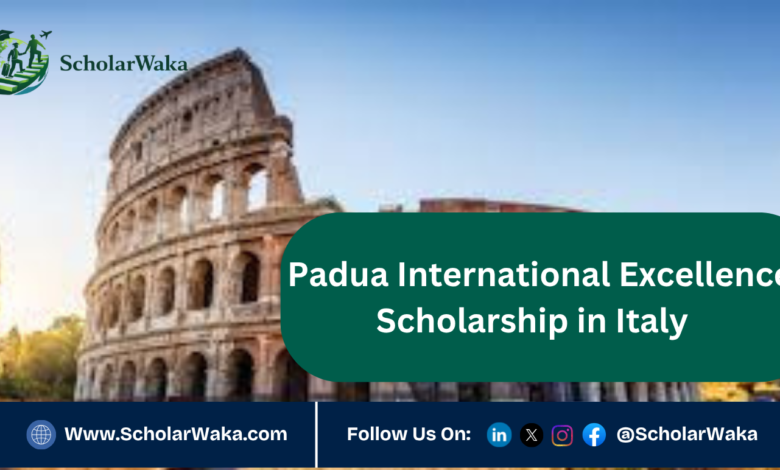
Choosing where to study abroad often comes down to one blunt question: can you actually afford it? The University of Padua built its International Excellence Scholarship to remove that question entirely for a select group of applicants: a full tuition waiver plus €8,000 a year, covering up to 68 places across Bachelor’s and Master’s programmes taught entirely in English.
The catch is timing: the 2026/27 application window has already closed, with the final round ending 2 May 2026. That doesn’t mean the opportunity is gone. Padua runs this scholarship every academic year, and this post covers exactly what it pays, who qualifies, what to prepare, and when the next round is likely to open so you’re ready the moment it does.
What The Padua International Excellence Scholarship Actually Is
Padua doesn’t run this as a separate award you apply for directly. Instead, when you apply to any eligible English-taught Bachelor’s or Master’s programme at the university, you’re automatically screened for the scholarship at the same time; there’s no extra form, no separate deadline, and no additional essay beyond what your degree application already requires.
The university reserves places for this across a wide range of departments, from engineering and mathematics to psychology, medicine, and political science, with each department’s Academic Committee reviewing applications for their own field. Founded in 1222, Padua is one of the oldest universities in Europe, and it uses this scholarship specifically to draw high-performing international students into English-taught programmes it wants to grow.
Padua International Excellence Scholarship Summary
| Scholarship Name ⇒ | Padua International Excellence |
| Host Country ⇒ | Italy |
| Study Level ⇒ | Undergraduate and Master’s |
| Benefits ⇒ | Full tuition fee waiver + €8,000 gross per year |
| Funded by ⇒ | University of Padua |
| Eligible Countries ⇒ | All countries |
| Application Deadline ⇒ | 2026/27 cycle closed 2 May 2026. Next cycle expected to open around November 2026 for 2027/28 admission. |
What the Scholarship Pays For
- Full tuition fee waiver — the only cost you carry each year is a small administrative fee covering the regional tax and revenue stamp, not full tuition.
- €8,000 gross per year, paid in two instalments of €4,000: the first after you arrive and enrol in Padua, the second once you’ve earned at least 12 ECTS credits before the end of March of your first year.
- Two years of funding for Master’s students, or three years for Bachelor’s and single-cycle degrees — the award tracks your full standard programme length, not just your first year.
- Continued funding is tied to academic progress, not just enrolment. Master’s and later-year Bachelor’s students need to hit specific ECTS thresholds each year — for example, 40 ECTS by September and 60 by March in year two — or the scholarship is suspended and can be revoked entirely.
- No living stipend beyond the €8,000 — accommodation, health insurance, and travel to Italy come out of your own budget, so plan for those separately from the scholarship itself.
Missing an ECTS threshold isn’t a minor slip here. Padua explicitly states scholarships can be revoked and already-paid instalments reclaimed if you fall short or withdraw, so treat the academic requirements as binding, not aspirational.
Eligibility Requirements
- Hold non-Italian citizenship (dual citizens with Italian nationality are excluded from this specific award)
- Do not currently reside in Italy
- A non-Italian secondary school certificate, if applying for a Bachelor’s programme
- Hold a non-Italian Bachelor’s degree, if applying for a Master’s programme
- meet the admission requirements for your specific chosen programme, since scholarship eligibility rides on programme eligibility
- Apply to an eligible English-taught degree at Padua, you can apply to up to three programmes at once, which gives you three separate shots at being selected
Selection itself comes down to academic merit: your grades, prior qualifications, and the strength of your application documents are assessed by each programme’s own Academic Committee. There’s no interview stage, and Padua states clearly that scholarships go primarily to first-round applicants, with second-round candidates considered only in exceptional cases.
That timing detail matters more than almost anything else in this post: applying in the first window rather than the second meaningfully changes your odds.

Documents You’ll Need to Prepare
- Valid passport or national ID card
- Italian residence permit — only relevant if you’re a non-EU applicant already living in Italy
- Academic transcripts, covering your most recent qualification
- Secondary school certificate or prior academic qualification, if already obtained — check Padua’s country-specific entry title requirements, since what counts as equivalent varies by country
- Curriculum Vitae
- Motivation letter
- Language proficiency certificate, if your chosen programme requires one
Two rules catch applicants out more than any other part of this list. First, every diploma and transcript must be officially stamped by the issuing institution and signed by the person responsible for issuing it and written or translated into Italian or English; if your originals are in another language, you need certified translations alongside them, not instead of them.
Second, everything uploads as a PDF, so scan or convert documents in advance rather than discovering a format problem mid-application. One thing Padua does not require: legalised documents. Skip that step entirely, since it’s not part of this process, and don’t pay for legalisation services that some agencies push regardless.
Getting Ready for the Next Round
Since the 2026/27 cycle is closed, use the months before the next one opens to get ahead of the two things that eliminate most late applicants: document gathering and translation delays.
- Start collecting your transcripts and certificates now. Official stamped copies can take institutions weeks to issue, especially outside term time.
- If your documents aren’t already in Italian or English, arrange certified translations early rather than scrambling once the window opens.
- Draft your motivation letter and CV now, while you have time to revise them, instead of writing them under deadline pressure.
- Shortlist up to three English-taught programmes you’d actually want to study, and check each one’s specific admission requirements; scholarship eligibility depends entirely on programme eligibility.
- Bookmark unipd.it/en/padua-excellence and check it from October onward, since Padua typically publishes its new Call for Applications shortly before the first round opens.
Application Deadline
The 2026/27 cycle ran across two windows, and both have closed. The first round ended on 7 March 2026 for limited-access programmes, and the second closed on 2 May 2026 for open-access programmes. Based on how this cycle unfolded, the 2027/28 first round will likely open around early November 2026, though Padua has not published a confirmed date yet.
The date to actually worry about is the first-round deadline, not the second. Padua states scholarships are reserved mainly for first-round applicants, with second-round candidates picked up only in exceptional cases when places remain unfilled. If you wait for a confirmed announcement before starting your documents, you’ll likely be preparing during the first-round window itself, at which point strong scholarship candidates have often already applied. Have your paperwork ready before applications open, not after.
Frequently Asked Questions
Is the Padua International Excellence Scholarship still open for 2026?
No. Both application rounds for the 2026/27 academic year have closed, with the final deadline on 2 May 2026. The next opportunity will be for 2027/28 entry, expected to open around November 2026.
Do I need to submit a separate scholarship application?
No. Applying to an eligible English-taught degree programme automatically enters you into scholarship consideration. There’s no additional form, essay, or deadline specific to the scholarship itself.
Can Nigerian or other African students apply?
Yes. The scholarship is open to non-Italian citizens from any country, so applicants from Nigeria or elsewhere in Africa qualify on the same terms as any other international applicant, provided they meet the academic and document requirements.
What happens if I apply in the second round instead of the first?
You can still be considered, but Padua states scholarships are mainly reserved for first-round applicants and second-round candidates are only picked up in exceptional cases where places remain. Applying in the first round gives you a meaningfully better chance.
Can I lose the scholarship after I’ve been awarded it?
Yes. You need to meet specific ECTS credit thresholds each year — for example, at least 12 ECTS in your first year — to keep receiving payments. Falling short, transferring universities, or withdrawing from your studies can lead to the scholarship being revoked and already-paid instalments being reclaimed.
Disclaimer: All scholarship details, deadlines, award values, and eligibility criteria in this post were verified from official sources as of July 2026. Information is subject to change without notice. Always confirm the latest details directly on the official University of Padua website before submitting your application. ScholarWaka is not affiliated with the University of Padua.
Official Application Portal
Join ScholarWaka Community
Get the latest scholarship updates and study abroad opportunities before anyone else.