Southern Illinois University Scholarship 2026

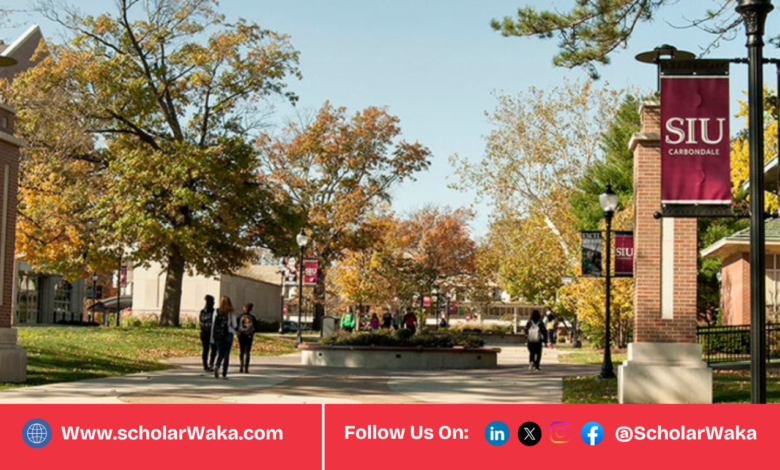
The Southern Illinois University Scholarship program for M.S. Graduate Research Assistantships in Forestry has concluded its application window for the 2026 academic term. This state-funded assistantship offered two postgraduate openings providing a structured salary of $22,000 annually alongside full tuition coverage for incoming students holding a Bachelor of Science degree in biology, ecology, wildlife, zoology, or forestry. Submissions closed on April 15, 2026.
This detailed preparation roadmap breaks down the academic prerequisites, core research parameters, and portfolio guidelines required to organize a successful application for the upcoming selection cycle.
Institutional Background and Research Mandate
The Department of Forestry at Southern Illinois University, based in Carbondale, establishes these graduate assistantships to address pressing environmental concerns within regional ecosystems. Funded directly through institutional research allocations and managed under the guidance of Dr Eric Holzmueller, the positions combine graduate-level academic education with professional employment. The initiative exists to generate actionable data on forest health, tracking both wildlife adaptive patterns and botanical changes resulting from environmental disturbances.
By financing incoming master’s candidates, the university maintains its contribution to public resource management policies while preparing the next generation of environmental researchers for roles in state agencies, conservation foundations, and academic organizations. Students selected for these roles balance university coursework with intensive field data collection, processing ecological metrics that directly guide local wildlife protection and forest restoration frameworks across the United States.
Southern Illinois University Scholarship Summary
| Scholarship Name ⇒ | Southern Illinois University M.S. Graduate Research Assistantships in Forestry |
| Host Country ⇒ | United States of America |
| Study Level ⇒ | Master’s |
| Benefits ⇒ | Full tuition coverage plus a fixed salary of $22,000 per annum for graduate research tasks. |
| Funded by ⇒ | Southern Illinois University, Department of Forestry |
| Eligible Countries ⇒ | All countries |
| Application Deadline ⇒ | 2026 cycle closed April 15, 2026. Watch for the 2027 cycle opening, expected around February 2027. |
Financial Provisions and Work Metrics
The financial framework accompanying this postgraduate assistantship addresses the baseline expenditures associated with pursuing an advanced degree in the United States. Recipients receive a multi-layered support package designed to offset educational fees while providing a reliable living baseline:
- Stipend Allocation: Selected candidates receive a starting salary of $22,000 per year, distributed in regular instalments throughout the academic term to handle accommodation, food, and personal maintenance costs. web.cobleskill.edu
- Tuition Indemnity: The program provides full tuition coverage for the entire duration of the Master of Science curriculum, exempting the student from base instructional fees charged by the university. web.cobleskill.edu
- Work Hours: Scholars are contracted to complete between 20 and 40 hours of paid research labor each week, balancing their time between field collection and indoor lab processing.
- Field Experience: The assistantship covers the travel and operational costs incurred during hands-on field research operations throughout southern Illinois ecosystems. web.cobleskill.edu
- Direct Guidance: Recipients receive immediate professional oversight and academic mentorship under the supervision of Dr. Eric Holzmueller within the Department of Forestry. SIU Faculty – Southern Illinois University
- Flexible Integration: The program accommodates two distinct entry points, offering formal start timelines on either May 11, 2026, or August 17, 2026, to align with undergraduate graduation dates. web.cobleskill.edu
Assigned Research Ventures
The assistantship allocates funding to two distinct environmental research initiatives. Applicants specify their preference during the submission phase based on their long-term career trajectories:
web.cobleskill.edu
- Project 1 — Nightjar Population Dynamics and Forest Management: This investigation continues long-term data collection to understand how varying forest management strategies impact localized nightjar populations. Fieldwork focuses primarily on monitoring the eastern whip-poor-will and the chuck-will’s-widow within southern Illinois habitats. The assigned scholar conducts spatial tracking, nocturnal call surveys, and habitat evaluation to provide data that influences regional wildlife conservation protocols and state forestry policies. This track commences early, with a mandatory field start date of May 11, 2026. web.cobleskill.edu+ 1
- Project 2 — Bottomland Forest Plantation Dynamics: This study evaluates the structural changes occurring within bottomland forest plantations following major ecological disturbances. The research focuses on tracking stand adjustments after the widespread loss of native ash trees and the subsequent expansion of non-native invasive plant species. The scholar processes data regarding forest regeneration, canopy opening metrics, and plant competition to help resource managers predict long-term ecological shifts. This research track aligns with the traditional fall term, beginning on August 17, 2026. web.cobleskill.edu
Eligibility Requirements
Candidates must fulfil strict academic and operational benchmarks to qualify for these research positions. The selection committee evaluates applicants based on their technical baseline rather than prior employment history:
- Academic Foundation: You must hold a completed Bachelor of Science degree in forestry, wildlife biology, ecology, zoology, or a closely related natural science discipline before the formal contract start date. web.cobleskill.edu
- Analytical Skills: You must possess strong quantitative and analytical reasoning traits, with the capacity to process complex environmental datasets. web.cobleskill.edu
- Software Familiarity: You must have functional baseline knowledge of the R programming language for statistical computation, alongside spatial mapping applications such as QGIS or ArcGIS. web.cobleskill.edu
- Field Competency: You must hold a valid driver’s license and demonstrate the physical capability to conduct independent fieldwork under demanding environmental conditions. Field spaces include steep terrain, dense brush, and routine exposure to ticks, poison ivy, and venomous snakes. web.cobleskill.edu
- Team Dynamics: You must operate effectively within collaborative research cohorts and maintain clear communication channels with fellow researchers, land managers, and academic faculty. web.cobleskill.edu
- Communication Skills: You must demonstrate strong written and oral articulation skills necessary for drafting papers and presenting findings to regional conservation boards. web.cobleskill.edu
- Prior Experience: No prior professional research experience is required to apply, allowing qualified recent graduates to compete equally for both openings. web.cobleskill.edu

Document Compilation Specifications
To ensure your portfolio receives full consideration during active review cycles, you must assemble a single unified document file. Separated uploads or disorganized attachments result in immediate electronic rejection by the graduate committee:
- Professional Cover Letter: A detailed letter outlining your past academic background, technical skills, familiarity with field methods, and explicit long-term career goals. You must specify which of the two research initiatives fits your focus. web.cobleskill.edu
- Detailed Curriculum Vitae: A CV containing your current contact information, exact graduation dates, calculated Grade Point Average, and Graduate Record Examination scores if available. web.cobleskill.edu
- Academic Transcripts: Legible copies of your undergraduate university transcripts detailing all completed modules and credit scores. Unofficial digital downloads are acceptable during the initial evaluation phase. web.cobleskill.edu
- Reference Contact List: The names, institutional titles, email addresses, and professional telephone numbers of three academic or professional references who can vouch for your technical aptitude and work ethic. web.cobleskill.edu
How To Apply
Future candidates preparing for the next open application cycle must execute their submissions systematically through the primary university channels:
- Step 1 — Portfolio Assembly: Gather your cover letter, transcripts, CV, and reference list into a single word processing file. Ensure all text is legible and free from formatting errors. web.cobleskill.edu
- Step 2 — PDF Conversion: Export the compiled document package into a single PDF file. Title the file using a standard protocol, such as your last name followed by the assistantship identifier. web.cobleskill.edu
- Step 3 — Direct Electronic Submission: Send the finalized PDF package via email directly to Dr Eric Holzmueller at [email protected]. Email remains the mandatory pathway for direct review by the selection board. web.cobleskill.edu
- Step 4 — Subject Line Optimization: Use an unambiguous, professional subject line that explicitly identifies the master’s assistantship position to prevent the email from being misfiled. web.cobleskill.edu
- Step 5 — Structural Intent Declaration: Clearly indicate within your cover letter text whether you are pursuing Project One, Project Two, or wish to be considered for both allocations equally. web.cobleskill.edu
- Step 6 — Early Submissions: File your paperwork well in advance of the soft target lines. The selection board reads incoming portfolios immediately upon receipt and extends offers on a rolling basis until both positions are occupied. web.cobleskill.edu
Application Deadline
The formal application deadline for the 2026 intake closed on April 15, 2026. Portals deactivate promptly, and the department does not accept supplementary documents past the closing hour.
For individuals targeting the 2027 academic year, the next funding cycle is projected to open its application window in February 2027. Prospective scholars should spend the preceding months polishing their spatial software skills, obtaining letters of recommendation, and coordinating with university registries to secure transcripts.
Frequently Asked Questions
Are international passport holders eligible to apply for these funded assistantships at Southern Illinois University?
Yes. The positions within the Department of Forestry accept applications from qualified international students from all countries. International candidates must meet standard US student visa eligibility criteria and university English language proficiency minimums upon receiving a formal offer.
Is it mandatory to submit official GRE scores during the application process?
No. While including Graduate Record Examination scores on your CV is recommended if you have already taken the test, it is not an absolute barrier to entry. The selection board places greater emphasis on your undergraduate science coursework, spatial software knowledge, and quantitative capacity.
Can I apply if my undergraduate degree is in general environmental science rather than forestry or zoology?
Yes. The selection committee considers degrees in related natural science fields provided your transcripts reflect sufficient coursework in basic biology, ecology, or quantitative data analysis. Familiarity with programming in R and spatial software remains a central evaluation factor.
Are the field research expenses and specialized safety equipment funded by the university?
Yes. All operational expenses related to field collection trips, including university vehicle access and project-specific monitoring equipment, are covered by the research grant. Students are expected to provide their own basic personal outdoor footwear and clothing appropriate for field conditions.
What is the expected completion timeline for this Master of Science degree track?
The Master of Science in Forestry at Southern Illinois University typically requires two full years of continuous enrollment to complete both the required coursework and the final research thesis defense. The assistantship funding is maintained across this period, subject to satisfactory academic and research performance.
Disclaimer: All scholarship details, deadlines, award values, and eligibility criteria in this post were verified from official sources as of July 2026. Information is subject to change without notice. Always confirm the latest details directly on the official Southern Illinois University website before submitting your application. ScholarWaka is not affiliated with Southern Illinois University.
Official Application Portal
Join ScholarWaka Community
Get the latest scholarship updates and study abroad opportunities before anyone else.