Turkiye Burslari Scholarships 2026 | Fully Funded

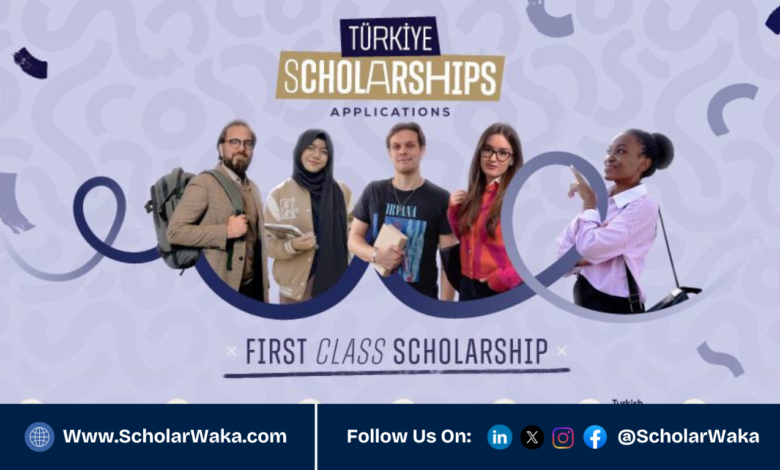
Turkiye Burslari is one of the largest and most comprehensive government scholarship programmes in the world, and the scale alone tells you something about how competitive it genuinely is: in a recent cycle, more than 165,000 students from over 170 countries applied, and roughly 5,000 scholarships were awarded — an acceptance rate sitting somewhere around 3 to 5 per cent.
Also, Check Out: Top Fully Funded Master’s Scholarships in Europe
If you’re checking this now, the 2026-2027 application window has closed, having run from 10 January to 20 February 2026. Applications are currently working through evaluation and interviews, with official results expected in August 2026 — meaning outcomes for this cycle should be landing right around now. This post covers exactly how the scholarship’s genuinely distinctive placement process works, corrects a couple of vague details from general summaries, and lays out what to prepare for the 2027-2028 cycle.
Don’t Miss: Top Fully Funded Scholarships for International Students
Turkiye Burslari Scholarships Summary
| Scholarship Name ⇒ | Turkiye Burslari |
| Host Country ⇒ | Turkey |
| Study Level ⇒ | Undergraduate, Master’s and PhD |
| Benefits ⇒ | Full tuition, accommodation, monthly stipend, health insurance, one-year Turkish language course, and round-trip airfare |
| Funded by ⇒ | Government of Türkiye |
| Eligible Countries ⇒ | All countries |
| Application Deadline ⇒ | 2026-2027 cycle closed 20 February 2026 (applications opened 10 January). Evaluation ran March–May, interviews June–July, with results expected in August 2026. Expect the 2027-2028 cycle to open around January 2027, though the exact date hasn’t yet been officially confirmed. |
About Turkiye Burslari Scholarships
What sets Turkiye Burslari apart from most government scholarship programmes isn’t just its scale — it’s the structure of how you actually get placed into a university and programme. Unlike scholarships that require you to already hold a university admission offer before applying for funding, Turkiye Burslari handles university and department placement for you entirely: you don’t need a prior acceptance letter at all. Instead, you select up to 12 preferred programmes and universities during your application, and a placement committee assigns you based on your academic profile weighed against those stated preferences — meaning your final placement isn’t guaranteed to be your first choice, but it is determined through a genuine matching process rather than left entirely to chance.
Also Read: How to Write a Personal Statement for Scholarship | Tips and Free Template
Beyond the standard track, Turkiye Burslari also runs several specialised tracks worth knowing about if you fit their specific criteria: the Success Scholarship for particularly high academic achievers, the Humanitarian Aid Scholarship, and the Science Scholarship aimed specifically at STEM disciplines. Türkiye’s higher education system itself has grown substantially as an international study destination — the country now hosts 207 higher education institutions, including 129 public and 73 foundation universities, and its international student population has grown from roughly 48,000 in 2013 to nearly 340,000 by the 2024-2025 academic year, giving a sense of the genuine scale and momentum behind Türkiye’s positioning as a global study destination.
What the Scholarship Covers
- Full tuition fee coverage, at your placed university and programme
- A monthly stipend, with specific rates by level: 4,500 Turkish Lira for bachelor’s and technical programmes, 6,500 TL for master’s, and 9,000 TL for PhD programmes — worth noting the specialised Arts and Merit scholarship tracks offer doubled stipend rates for those specific categories
- Free accommodation, arranged as part of your placement
- A one-year Turkish language preparation course, provided for any recipient who doesn’t already hold C1-level Turkish proficiency — meaning you genuinely don’t need existing Turkish language skills at the time of application
- Health insurance, covering the duration of your studies
- A round-trip flight ticket, covering your journey to Türkiye and back
- Participation in cultural activities, internship opportunities, and professional networking seminars, designed to support your broader integration and career development beyond the classroom
Worth being clear about the currency exposure here: your stipend is paid in Turkish Lira, which means its real value can shift with exchange rate movements over the course of your studies — this is genuinely worth factoring into your longer-term budgeting, particularly for multi-year Master’s or PhD programmes.

Eligibility Requirements
- You must be an international student of any nationality — Turkish citizens are not eligible
- Undergraduate applicants: minimum 70% academic performance required; for health sciences specifically (Medicine, Dentistry, Pharmacy), the minimum rises to 90%
- Master’s applicants: minimum 75% academic performance required
- PhD applicants: minimum 75% academic performance required
- Research applicants: must be in the thesis stage of a PhD, or have already completed one
- Age limits: 21 for undergraduate applicants, 30 for Master’s, 35 for PhD, and 50 for Research applicants
- Some specific programmes may additionally require standardised test scores, such as GRE or GMAT, depending on the field
- Students currently enrolled in Türkiye are not eligible to apply
Given how significantly the acceptance rate sits below general scholarship averages, treat academic performance thresholds as genuine floors rather than competitive targets — meeting the minimum percentage doesn’t meaningfully improve your odds against an applicant pool this large; a strong motivation letter and confident interview performance are what the data suggests actually distinguishes selected candidates.
Required Documents
The list provided matches the mandatory core requirements for international government and higher education scholarship schemes—such as Türkiye Bursları (Turkey Scholarships) and major European public university admission systems.
Because selection committees evaluate these exact document categories, fulfilling each requirement to the highest standard determines whether your file advances past administrative screening.
1. National Identification or Valid Passport
- Identification Standard: High-resolution color scan of the main biodata page of your valid international passport.
- Validity Horizon: Most international systems require your passport to be valid for at least 6 to 18 months beyond your intended travel/enrollment date to facilitate visa issuance and residence permits.
- Alternative ID: If you do not yet hold a passport at the time of application, a government-issued National Identity Card is acceptable, provided your name matches all academic certificates exactly.
2. Recent Photograph
- Visual Specifications: A clear, passport-style photograph taken within the last 6 months against a plain white or light background.
- Technical Quality: Front-facing, eye-level framing showing your full face and shoulders. Avoid heavy filters, dark glasses, hats (unless worn for religious or medical purposes), or low-resolution camera phone selfies.
3. National Exam Scores (Where Applicable)
- Target Applicants: Primarily evaluated for domestic or international students coming from educational systems with mandatory standardized national secondary school exit exams (e.g., WAEC/NECO in West Africa, Baccalauréat in Francophone nations, A-Levels, YKS/YÖS in Turkey, or national university entrance tests).
- Document Standard: Official examination certificates or verified results slips issued by your country’s national testing board.
4. Diploma or Temporary Certificate of Graduation
- Level-Specific Requirements:
- Undergraduate applicants: High school diploma or secondary school completion certificate.
- Master’s applicants: Official Bachelor’s degree diploma.
- PhD applicants: Official Master’s degree diploma (or thesis-based equivalent).
- Pending Graduates: If you are in your final year of study and have not yet graduated, submit an Official Expected Graduation Letter (or Provisional Certificate) issued by your registrar confirming your current enrollment and prospective completion date before the start of the scholarship term.
5. Official Academic Transcripts
- Scope of Records: Complete semester-by-semester or year-by-year academic mark sheets covering the entirety of your previous degree(s).
- Authentication & Translation: Must bear the official stamp/seal of the issuing university registrar. Documents issued in languages other than English or the host country’s official language must be accompanied by a certified, sworn translation.
- Grading System Explanation: Include an official grading scale or key (often found on the back of the transcript) explaining how your institution calculates GPA or percentage equivalents.
6. International Exam Scores (Program-Specific)
- Aptitude Examinations: Required for specific competitive disciplines (especially business, finance, engineering, and quantitative graduate programs).
- Graduate Programs: GRE (Graduate Record Examination) or GMAT (Graduate Management Admission Test).
- Undergraduate Programs: SAT or ACT (where international academic equivalency is requested).
- Verification: Ensure scores are valid (typically under 5 years old) and uploaded as an official examinee report.
7. Language Test Scores (Program-Specific)
- Medium of Instruction: Required primarily when applying for programs taught in English or a foreign language.
- English Programs: TOEFL iBT, IELTS Academic, or equivalent standardized scores.
- Other Foreign Languages: DELF/DALF (French), TestDaF/Goethe (German), JLPT (Japanese), HSK (Chinese), or TÖMER (Turkish).
- Exemptions: Some universities waive language testing if your prior degree was completed entirely in the target language of instruction, provided you submit an official Medium of Instruction (MOI) Certificate.
8. Detailed Research Proposal (PhD Applicants Only)
A PhD research proposal is a critical evaluation component that demonstrates your capacity for independent academic inquiry, theoretical understanding, and methodological rigor.
How to Apply
- Confirm you meet the academic and age requirements for your intended level — undergraduate, master’s, PhD, or research.
- Visit the official Turkiye Scholarships website (turkiyeburslari.gov.tr) and create an individual account — applications must be made directly by the applicant, not through a third party.
- Complete the online application form with accurate personal, academic, and contact information.
- Select up to 12 preferred programmes and universities from the available options — you don’t need a prior admission letter, since placement happens through this preference-based system.
- Upload all required documents to the online application portal.
- Review your application carefully for accuracy, then submit before the deadline.
- Applications go through document review and shortlisting; if shortlisted, you’ll be invited to an interview, conducted either in your home country or online, combining an academic component and a personal discussion.
- Watch your email — including your spam folder — closely during the interview invitation and results periods, since missed emails have genuinely cost applicants their spot in past cycles.
- If selected, you’ll receive an offer along with instructions for visa and other formalities.
How to Prepare for the 2027-2028 Cycle
With this cycle’s results imminent and the next official deadline not yet confirmed, the coming months are for building a genuinely strong application ahead of the 2027-2028 window, expected to follow a similar January-to-February pattern:
- Draft your motivation letter and research proposal (if applying for a PhD) well in advance, given how much interview performance and written materials appear to matter in a pool this competitive.
- Research your 12 preferred programmes and universities thoughtfully, rather than filling the list quickly, since your final placement depends on how the committee weighs your preferences against your academic profile.
- Don’t wait to build Turkish language skills before applying — this genuinely isn’t required at application time, and the one-year language course is built into the scholarship itself for anyone below C1 level.
- Gather your transcripts, diploma, and any required test scores early, particularly if any documents need translation or certification.
- Watch turkiyeburslari.gov.tr directly for the official 2027-2028 announcement, since unofficial sites sometimes publish estimated dates before Türkiye Scholarships confirms them — rely on the official portal specifically rather than secondary predictions.
Deadline
The 2026-2027 application window ran from 10 January to 20 February 2026, with evaluation continuing through March to May, interviews in June and July, and official results expected in August 2026. The official deadline for the 2027-2028 cycle has not yet been announced — based on this consistent annual pattern, expect a similar January-to-February window, though this should be confirmed directly through turkiyeburslari.gov.tr once officially released.
Frequently Asked Questions
Do I need a university admission letter before applying?
No. Turkiye Burslari handles university and department placement itself — you select up to 12 preferred programmes, and a placement committee assigns you based on your academic profile and stated preferences.
Do I need to already speak Turkish to apply?
No. No Turkish language skills are required at application. All scholarship recipients below C1 level attend a one-year Turkish language preparation course before beginning their degree.
Can Nigerian students apply?
Yes. The scholarship is open to all nationalities except Turkish citizens, so Nigerian applicants are eligible provided they meet the academic and age requirements for their intended level.
How competitive is Turkiye Burslari, realistically?
Very. Recent cycles have seen 165,000+ applications for around 5,000 scholarships, putting the acceptance rate at roughly 3-5%.
What happens if I already submitted my 2026-2027 application?
Results for this cycle are expected in August 2026. Check your email regularly, including your spam folder, for interview invitations and final outcome notifications.
Disclaimer: All scholarship details, deadlines, and figures in this post were verified from official and reported sources as of July 2026. Information is subject to change without notice, and the 2027-2028 deadline had not yet been officially announced at the time of writing. Always confirm the latest details directly on the official Turkiye Scholarships website (turkiyeburslari.gov.tr) before submitting an application. ScholarWaka is not affiliated with the Government of Türkiye.
Official Application Portal
Join ScholarWaka Community
Get the latest scholarship updates and study abroad opportunities before anyone else.