WWF BRIDGE Paid Internship | How It Works

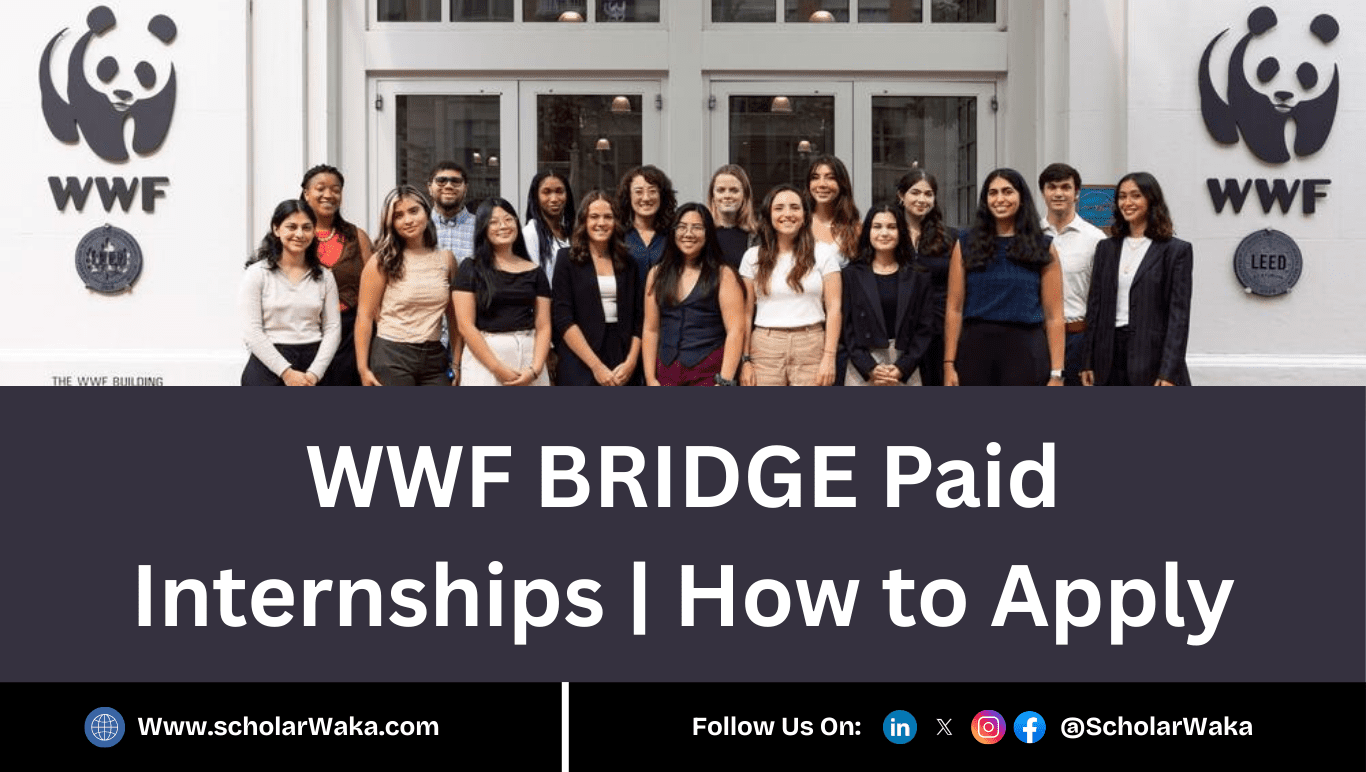
The WWF BRIDGE Paid Internship gives undergraduate, graduate, and doctoral students a genuinely paid, 10-week summer entry point into conservation and environmental work — real projects, real mentorship, and a real hourly wage, not an unpaid resume line. Hiring for the 2026 cycle has already been completed, as confirmed directly on WWF’s official BRIDGE Internships page. You must already be eligible to work in the US — WWF does not provide visa sponsorship for this programme.
WWF BRIDGE Paid Internship Summary
| Programme Name ⇒ | WWF BRIDGE Internship |
| Host Country ⇒ | United States |
| Host Organisation ⇒ | World Wildlife Fund (WWF) |
| Category ⇒ | Internship |
| Duration ⇒ | 10 weeks (2026 cycle ran 1 June – 7 August) |
| Eligibility ⇒ | Must be eligible to work in the US — no visa sponsorship provided |
| Reward ⇒ | $20.50/hr (undergraduate), $22.50/hr (graduate), mentorship, professional development |
| Application Status ⇒ | 2026 cycle closed. New roles typically post on WWF’s careers page in late March for the following cycle. |
About the WWF BRIDGE Paid Internship
Launched in 2021, BRIDGE was built specifically to remove a real barrier facing students entering conservation and sustainability careers: limited access to paid, professional-level experience. WWF particularly welcomes applicants with a professional background who haven’t yet considered conservation as a career path — you don’t need prior experience in the environmental sector to be a strong candidate.
The internship runs primarily out of WWF’s headquarters in Washington, D.C., with both hybrid and fully virtual roles available across a genuinely wide range of disciplines — research, communications, sustainability strategy, and programme operations among them. WWF doesn’t run this as one single application; individual internship roles are posted separately on the WWF careers page, typically starting in late March, each with its own listing and often its own deadline, many clustering around mid-March for the following cycle.
Eligibility Requirements
- Be currently enrolled in an associate’s, bachelor’s, master’s, or doctoral degree programme
- Doctoral candidates: have completed no more than two years of coursework at the time of application
- Not have already graduated before the programme’s start date
- Students finishing a bachelor’s degree this term and entering a graduate programme next term remain eligible for graduate-level roles; the same applies to associate’s-to-bachelor’s transitions
- Be legally eligible to work in the United States — WWF does not provide visa sponsorship for this programme
WWF also evaluates candidates on specific competencies: genuine attention to detail, initiative, organisational skills, adaptability, teamwork, alignment with WWF’s stated values of Courage, Integrity, Respect, and Collaboration, proficiency with Microsoft Office, and research skills, particularly for graduate-level roles.

What the WWF BRIDGE Paid Internship Offers
- An hourly wage: $20.50 for undergraduate interns, $22.50 for graduate interns
- Flexible virtual or hybrid work arrangements
- Genuine mentorship and networking with WWF professionals and fellow interns
- Five days of paid sick leave for interns based in Washington, D.C.
- A Monday-to-Thursday schedule, with Fridays off
- Access to the Calm app and an employee assistance programme for wellness support
- Direct exposure to how one of the world’s most established conservation organisations actually operates, according to WWF’s own overview of its global conservation work
Required Documents
- A cover letter
- A resume
- A letter of recommendation, requested only from shortlisted candidates at a later stage
How to Apply, When the Next Cycle Opens
- Confirm you’re eligible to work in the US without visa sponsorship — this determines whether this internship is realistically accessible to you
- Watch WWF’s official careers page directly starting in late March, when individual roles for the next cycle are typically posted
- Review the specific listed roles and choose those genuinely matching your academic background and interests, since each is a separate application
- Prepare a genuine, specific cover letter explaining your interest in conservation, alongside an updated resume
- Submit your application for your chosen role before its individual deadline — don’t assume every role shares the same closing date
- If shortlisted, be ready to provide a letter of recommendation
For help building strong application materials ahead of the next cycle, our guides on how to write a strong academic CV for scholarships and how to write a personal statement for scholarship cover the underlying craft directly, even though this is a paid internship rather than a scholarship. Our guide on what to do after you submit a scholarship application also applies here once you’ve submitted your BRIDGE application and are waiting to hear back.
Official Application Portal
Frequently Asked Questions
Is the WWF BRIDGE Internship open to international applicants?
Only if you’re already eligible to work in the US independently — WWF explicitly does not provide visa sponsorship for this programme. Confirm your own work authorization status before applying.
Is the WWF BRIDGE Internship currently accepting applications?
No. WWF’s own careers page confirms hiring for the 2026 cycle has completed. New roles for the next cycle typically post in late March.
Does the WWF BRIDGE Internship have one single application deadline?
No. Individual roles are posted separately, each with its own listing and often its own specific deadline — check each role you’re interested in directly rather than assuming a single shared date.
How much does the WWF BRIDGE Internship pay?
$20.50 per hour for undergraduate interns, $22.50 per hour for graduate interns, over a 10-week programme.
Do I need prior conservation experience to apply?
No. WWF specifically welcomes applicants who haven’t previously considered conservation as a career path, provided you meet the academic and work-authorization eligibility requirements.
Disclaimer: All programme details, including the US work authorization requirement and current cycle status, were verified directly against WWF’s official careers page as of August 2026. Always confirm current openings and eligibility directly before applying.
Join ScholarWaka Community
Get the latest scholarship updates and study abroad opportunities before anyone else.