2026 Erasmus Mundus Journalism Scholarship | Fully Funded

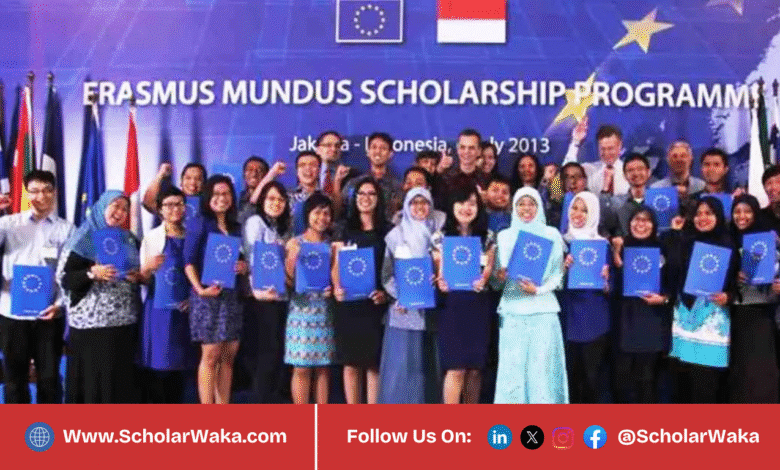
Erasmus Mundus Journalism — formally the Master in Journalism, Media and Globalisation — is run by a consortium of universities across Denmark, the Netherlands, Germany, the UK, and the Czech Republic, and it’s one of the more established Erasmus Mundus joint degrees specifically built around training journalists who can genuinely operate across borders and media systems, not just within one national press tradition.
Also, Check Out: Top Fully Funded Master’s Scholarships in Europe
If you’re checking this now, the 2026-2028 intake has fully closed its selection process: applications ran from 1 November 2025 to 10 January 2026, admission results were emailed to applicants on 1 March 2026, and the incoming cohort starts on 1 September 2026. This post covers exactly how the programme’s structure and scholarship work, and what to prepare for the next call, expected to open around 1 November 2026 for the 2027-2029 intake.
Also Read: How to Write a Personal Statement for Scholarship | Tips and Free Template
About the Erasmus Mundus Journalism Scholarship
The programme runs as a genuine two-year, 120-ECTS joint degree, with mandatory mobility across at least two European countries built directly into its structure — you don’t choose whether to relocate mid-programme, it’s a required part of how the degree is delivered. Your first year is typically shared, before you select a specific second-year specialisation track, choosing between Amsterdam, Prague, London, or Munich — and this is a genuinely locked decision: once you accept your offer, you cannot change your selected second-year city afterwards, so it’s worth researching each track’s specific focus and faculty carefully before you submit your application, not after.
Don’t Miss: Top Fully Funded Scholarships for International Students
The programme trains students to analyse how media intersects with politics, technology, and global society, combining rigorous theory with genuinely hands-on journalism practice, and drawing together students from more than 100 countries into each cohort — giving you direct, sustained exposure to how journalism actually operates differently across vastly different media and political systems, not just an academic overview of the concept.
Erasmus Mundus Journalism Scholarship Summary
| Scholarship Name ⇒ | Erasmus Mundus Journalism |
| Host Country ⇒ | European countries |
| Study Level ⇒ | Master’s |
| Benefits ⇒ | Full tuition waiver plus a monthly stipend of up to €1,400 for 24 months |
| Funded by ⇒ | Erasmus Mundus Joint Master’s (EMJM) |
| Eligible Countries ⇒ | All Countries |
| Application Deadline ⇒ | 2026-2028 intake closed 10 January 2026, 23:59 CET. Results were emailed 1 March 2026. The programme begins 1 September 2026. Next call (2027-2029 intake) expected to open around 1 November 2026. |
What the Scholarship Actually Covers
The Erasmus Mundus Master’s in Journalism, Media and Globalisation (Mundus Journalism)—funded by the European Union—offers a fully funded financial package designed to cover tuition, living expenses, mobility costs, and comprehensive insurance over a two-year degree (120 ECTS).
1. Financial Coverage & Direct Stipends
- Full Tuition Fee Waiver (24 Months):
- Coverage: 100% waiver of tuition fees for both Year 1 (Aarhus University & Danish School of Media and Journalism, Denmark) and Year 2 at your chosen partner specialization university (e.g., City, University of London; University of Amsterdam; LMU Munich; or Charles University, Prague).
- Consortium Value: Even for self-funded applicants, the Mundus Journalism Consortium caps base tuition significantly below standard international Master’s rates in the UK or Western Europe, enhancing overall affordability.
- Monthly Living Allowance (€1,400 / Month):
- Total Value: €33,600 distributed across the 24-month duration of the program (€1,400/month).
- Purpose: Covers housing, food, domestic transit, visa application fees, residence permits, and personal study expenses across both host countries.
- Mandatory Comprehensive Health & Liability Insurance:
- Coverage Standards: Fully funded insurance package compliant with Erasmus+ requirements, covering medical care, emergency hospitalization, travel insurance, accidents, permanent invalidity, and civil liability across all mobility destinations.
2. Career Development, Alumni Support & Alternative Funding
- Dual Institutional Career Support & Workshops:
- Career Services: Scholars gain full access to career advising centers, media labs, networking events, and job portals at both host universities attended during the two-year period.
- Pre-Graduation Alumni Career Workshop:
- Dedicated Event: Near graduation, the program hosts a specialized career workshop featuring returning alumni from global media outlets (such as BBC, Reuters, and international NGOs).
- Focus: Hands-on guidance on transitioning into investigative reporting, cross-border journalism, media research, digital communications, and policy roles.
- Alternative Erasmus+ Mobility Stipends for Non-Scholarship Students:
- Second-Year Funding Safety Net: Applicants admitted as self-funded students who do not receive the full Erasmus Mundus scholarship remain eligible to apply for Erasmus+ mobility grants (approx. €400–€600/month) for their second-year study track in Europe.
Eligibility Requirements
The Erasmus Mundus Master’s in Journalism, Media and Globalisation (Mundus Journalism)—co-offered by Aarhus University (Denmark), the Danish School of Media and Journalism, and international partner universities—uses a rigorous, merit-based screening process.
To qualify for admission and scholarship consideration, applicants must meet mandatory academic, professional, and language standards:
1. Academic Qualifications & Grade Benchmarks
- Recognized Bachelor’s Degree:
- Must hold a Bachelor’s degree (minimum 3 years of full-time study, equivalent to 180 ECTS) in Arts, Humanities, Social Sciences, or a related field from an accredited higher education institution.
- Enrolment Deadlines for Graduating Students:
- Candidates in their final year of undergraduate study may apply using their current academic transcripts.
- Strict Deadline: Final degree documentation and official graduation certificates must be submitted to Aarhus University no later than August 1 of the intake year to finalize registration prior to the September term start.
- Academic Merit Standard:
- Applicants must demonstrate an above-average academic record (high Class 2:1, GPA $\ge 3.0/4.0$, or equivalent grading distinction). Priority in selection and scholarship ranking is determined primarily by academic performance.
2. Documented Journalistic Experience & Language Proficiency
- Minimum Journalism Experience (3+ Months):
- Must provide proof of at least 3 months of documented journalism experience.
- Accepted Experience: Full-time or part-time professional reporting, freelancing, media research, editorial roles, or student journalism (e.g., campus newspapers, independent student podcasts, digital magazines).
- Verification: Supported by published work samples, editorial reference letters, and a detailed employment/experience log.
- Certified English Language Proficiency:
- Non-native English speakers (who do not hold citizenship from exempt English-speaking countries like the UK, USA, Australia, Canada, or New Zealand) must provide official test scores matching or exceeding these thresholds:
- IELTS Academic: Minimum 7.0 overall score (with individual sub-scores specified by second-year tracks).
- TOEFL iBT: Minimum total score of 100 (internet-based).
- Cambridge English: C1 Advanced (CAE) or C2 Proficiency (CPE) with a passing score / $\ge 190$ points.
- Non-native English speakers (who do not hold citizenship from exempt English-speaking countries like the UK, USA, Australia, Canada, or New Zealand) must provide official test scores matching or exceeding these thresholds:

Required Documents
To apply for the Erasmus Mundus Master’s in Journalism, Media and Globalisation (Mundus Journalism), all supporting materials must be combined into a single, unified PDF file. The selection committee screens applications using strict sequential indexing; packages that fail to follow the designated file structure, exceed file size limits, or omit required sections risk immediate disqualification.
1. Mandatory Technical & Compilation Rules
- Single PDF File Requirement: All documents must be merged into one single
.pdfdocument. Multiple separate attachments are not accepted. - Strict File Size Limit: The merged PDF must not exceed 10 MB. (Compress high-resolution transcript scans or images if needed prior to merging).
- Standard File Naming Convention:
- Naming Pattern:
YourFullName_SecondYearCity_EUorNonEU - Examples:
Ana_Aurelia_Prague_EU_citizenJohn_Doe_Amsterdam_NonEU_citizenFatima_AlMansoor_London_NonEU_citizen
- Naming Pattern:
2. Strict Document Assembly Order
Your merged PDF file must follow this exact sequential order:
1. Mundus Journalism Application Form (Including Application Reflections):
- Official PDF form completed, dated, and signed.
- Contains your personal details, choice of Year 2 specialization university (Amsterdam, London, Munich, or Prague), and the Application Reflections section (which serves as your primary motivational statement—a separate cover letter is not required).
2. Academic Certificates & Transcripts of Records:
- Official graduation certificates/diplomas for all higher education degrees (or proof of expected completion before August 1).
- Detailed academic transcripts showing all courses taken, grades/marks obtained, and institutional grading scale keys.
- Certified English translations must accompany all original documents issued in other languages.
3. Journalistic Evidence & Three (3) Work Samples:
- Proof of Experience: Official signed employment letter, contractor certificate, or editor verification confirming at least 3 months of professional or student journalism work.
- Three (3) Work Samples: Published news articles, broadcast scripts, investigative reports, or multimedia clips. Non-English samples must include an applicant-provided English summary. Active hyperlinks may be embedded for audio/video materials.
4. English Language Proficiency Certificate:
- Official score report for IELTS Academic (min. 7.0), TOEFL iBT (min. 100), or Cambridge C1/C2 (min. 190 points).
- Formal English exemption documentation if holding citizenship or degree completion from an approved English-speaking country.
5. Curriculum Vitae (CV):
- Concise professional resume formatted to a maximum of two (2) pages (Europass format or equivalent standard).
- Chronologically outlines education, journalism output, awards, extracurricular leadership, and language proficiencies.
6. Academic Reference Letter:
Signed letter on official university letterhead from a professor or academic advisor assessing analytical capabilities, intellectual curiosity, and academic writing strength.
7. Professional Reference Letter:
Signed letter on company/organization letterhead from a senior supervisor or manager commenting on work ethic, teamwork, and professional conduct.
8. Journalistic Reference Letter:
Signed letter on newsroom/media letterhead from a senior editor or news director assessing reporting integrity, editorial skills, and commitment to journalism. (Note: In some cases, the professional and journalistic letters can be provided by the same newsroom supervisor if they address both dimensions).
9. Proof of Nationality:
Clear, high-resolution scan of your valid national passport (personal details and photo page). Applicants with dual citizenship must upload copies of both passports.
10. Special Needs Documentation (If Applicable):
Official medical, accessibility, or chronic illness documentation required for institutional accommodations or specialized scholarship support.
How to Apply
- Download the official Mundus Journalism Application Form from the programme’s website.
- Gather all required documents in the specified order: application form, academic certificates, journalism experience proof and work samples, English test results, CV, references, and passport copy.
- Select your second-year specialisation city now — Amsterdam, Prague, London, or Munich — since this choice cannot be changed after you accept an offer.
- Combine everything into a single PDF, no larger than 10MB, following the required naming convention.
- Complete the online registration form and upload your PDF — if you encounter a “bad gateway” error, try a different browser or device before assuming a technical failure on your end.
- Submit before the deadline (10 January, 23:59 CET, for this cycle).
- Watch for your admission result by email around 1 March — if accepted, reply promptly, since the consortium operates on a genuinely short response window to be able to offer your place to another applicant if you decline.
How to Prepare for the 2027-2029 Intake
With this cycle’s cohort about to begin their studies, the coming months are for building toward the next call, expected to open around 1 November 2026:
- Start building or documenting your three months of journalism experience now, if you don’t already have it — student journalism counts, so campus publications, podcasts, or online reporting projects are genuinely valid ways to build this before the next application window.
- Research all four second-year specialisation cities thoroughly before you apply, given that this choice locks in permanently once you accept an offer — Amsterdam, Prague, London, and Munich each carry distinct academic strengths worth understanding in advance.
- Sit your English proficiency test early if you don’t already hold a qualifying score, since results can take weeks and you’ll want this settled well before a January-style deadline.
- Select your three work samples deliberately, choosing pieces that demonstrate genuine reporting and analytical range across your journalism experience.
- Line up your three required references — academic, professional, and journalistic — well in advance, since coordinating three distinct referee relationships takes real lead time.
- Watch the official Mundus Journalism website directly, since the call for the 2027-2029 intake is expected to open around 1 November 2026, following this cycle’s consistent pattern.
Deadline
The 2026-2028 intake’s application window ran from 1 November 2025 to 10 January 2026, 23:59 CET, and this has closed. Admission results were emailed around 1 March 2026, and the programme begins 1 September 2026. Based on this consistent annual pattern, the next call, for the 2027-2029 intake, is expected to open around 1 November 2026, with a similar early-January deadline.
Frequently Asked Questions
Can I apply before I’ve finished my Bachelor’s degree?
Yes, provided you can document its completion no later than 1 August of your intake year.
Do I need professional journalism work experience specifically?
No. A minimum of three months of documented journalism-related experience is required, and this explicitly includes student journalism, not only paid professional roles.
Can I change my second-year city after accepting my offer?
No. Your second-year specialisation (Amsterdam, Prague, London, or Munich) is selected during your application and cannot be changed once you’ve accepted admission.
What happens if I don’t receive the Erasmus Mundus scholarship?
You may still be eligible for admission to the programme without the scholarship, and could apply for a separate Erasmus+ stipend specifically for your second year of study.
What happens if I already missed the 10 January 2026 deadline?
This cycle is closed, and the 2026-2028 cohort begins in September 2026. Use the coming months to build your journalism experience portfolio and prepare your application ahead of the next call, expected around 1 November 2026.
Disclaimer: All scholarship details, deadlines, and figures in this post were verified from official sources as of July 2026. Information is subject to change without notice. Always confirm the latest details directly on the official Mundus Journalism website before submitting an application. ScholarWaka is not affiliated with the European Union or the Mundus Journalism consortium universities.
Official Application Portal
Join ScholarWaka Community
Get the latest scholarship updates and study abroad opportunities before anyone else.