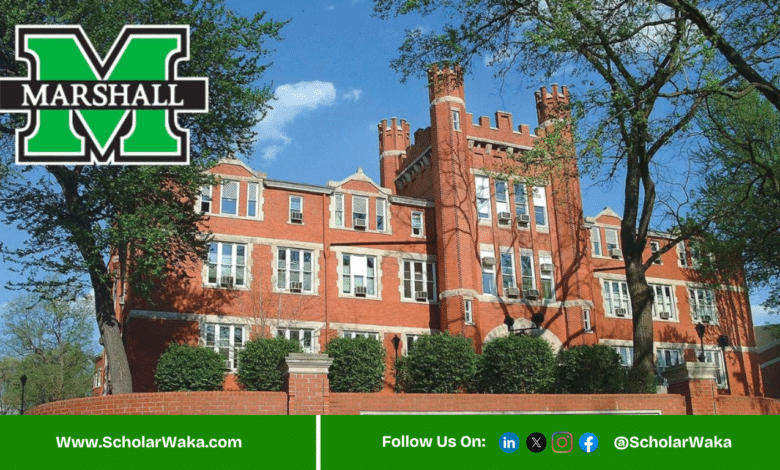
Marshall University Scholarship in USA 2026 | Fully Funded

There’s a very specific kind of scholarship this is, and it’s worth being upfront about that before anything else: this is a genuine, hands-on research job wrapped around a funded Master’s degree, not a conventional scholarship you apply to and then choose your own research direction within. If snorkelling through West Virginia streams at night searching for one of North America’s largest salamanders sounds like a dream rather than a job requirement, this three-year assistantship in Marshall University’s Herpetology and Applied Conservation Lab might be exactly what you’re looking for.
Don’t Miss: Top Fully Funded Scholarships for International Students
Applications closed on 30 April 2026, although the posting stated that positions would remain open until filled. Given that the programme’s August 2026 start date has now arrived, another candidate has likely filled this specific position. However, the programme’s structure and requirements remain useful to understand if the laboratory advertises similar opportunities in future application cycles. This guide covers exactly what the fieldwork and coursework involve, the physical and practical eligibility requirements that go well beyond academic criteria, and what the funding actually includes.
Also, Check Out: Top Fully Funded Master’s Scholarships in Europe
About the Marshall University Scholarship
This M.S. assistantship sits within Marshall University’s Department of Biological Sciences, specifically inside the Herpetology and Applied Conservation Lab, run by Dr Jayme Waldron and Dr Shane Welch. The research focuses on eastern hellbenders — large, fully aquatic salamanders found in West Virginia’s rivers and streams, and a species of genuine conservation concern.
Also Read: How to Write a Personal Statement for Scholarship | Tips and Free Template
The position is funded through an externally supported research project that operates in active collaboration with state, federal, and NGO conservation partners. As a graduate student, you will work directly with real-world conservation practitioners throughout your research rather than conducting your work in academic isolation.
Marshall University Scholarship Summary
| Scholarship Name ⇒ | Marshall University |
| Host Country ⇒ | USA |
| Study Level ⇒ | Master’s |
| Benefits ⇒ | ~$18,000/year salary, plus a tuition waiver (excluding fees) |
| Funded by ⇒ | Marshall University, Huntington, West Virginia |
| Eligible Countries ⇒ | All Countries |
| Application Deadline ⇒ | 30 April 2026, reviewed on a rolling basis, positions remaining open until filled — the August 2026 start date has now arrived, so this position is likely filled |
What Makes You Eligible for This Position
- You need a completed Bachelor’s degree
- You need at least one year of relevant experience
- You need to be able to swim — this is a genuine, practical requirement given the nature of the fieldwork, not a formality
- You need a valid state motor vehicle operator’s licence
- You need prior field research experience and a genuine interest in hellbender ecology specifically
- You need to be committed to following strict safety protocols throughout your fieldwork
- You need to be able to tolerate uncomfortable field conditions — this work involves long hours outdoors, often in water, and isn’t suited to someone expecting a primarily desk-based research experience
- You need to demonstrate clear maturity and sound judgement
- You need a genuine history of working well with others, alongside the ability to work independently when required
- A minimum undergraduate GPA of 3.0 is strongly preferred, though not stated as an absolute cutoff
What the Role Actually Involves
- Fieldwork: Visual surveys conducted through snorkelling, mark-recapture surveys, nest surveys, environmental DNA (eDNA) sampling, and processing digital images and video footage collected during survey work
- Graduate coursework: Completing 32 hours of coursework, built around a thesis that fits directly within the broader funded research project
- Teaching duties: Serving as a graduate teaching assistant for undergraduate biology labs, for a minimum of four semesters across your three-year commitment
- Research support: Participating in grant writing, contributing to data analysis, and helping produce reports under the guidance of the project leaders and senior lab staff
- Partner collaboration: Communicating and working directly with the state, federal, and NGO partners involved in the broader hellbender conservation project

What This Position Actually Pays
The financial and professional compensation for this Master of Science (M.S.) Graduate Assistantship at Marshall University is designed to balance direct income with academic tuition coverage and hands-on professional development:
- Annual Living Stipend: Position recipients receive an annual stipend of approximately $18,000 per year. This stipend provides living support for the duration of the assistantship while you pursue your graduate degree.
- Tuition Waiver: The position includes a university tuition waiver covering primary instructional fees.
- Important Note: The tuition waiver explicitly excludes mandatory university fees, such as campus facility fees, technology fees, or departmental activity fees. These remaining university fees are the responsibility of the student and must be paid out of pocket each semester.
- Direct Mentorship & Academic Supervision: Graduate researchers work directly under the mentorship of the primary investigators (PIs), Dr. Jayme Waldron and Dr. Shane Welch. You will receive targeted guidance on thesis research design, data collection protocols, statistical analysis, and manuscript preparation.
- Applied Field Research Experience: Candidates gain extensive, practical field research experience working on active wildlife and ecological conservation initiatives (such as state herpetological conservation programs or species-at-risk monitoring).
- Pedagogical & Teaching Experience: As part of the Graduate Teaching Assistantship (GTA) duties, candidates assist in undergraduate biology laboratory instruction, gaining teaching experience in a university environment.
What Documents You Need to Prepare
Applicants must assemble a concise three-part application packet. All three files must be merged into a single PDF document prior to submission. Initial administrative screenings strictly enforce this single-PDF requirement.
- One-Page Statement of Interest:
- A single-page cover essay outlining your research background, career goals in conservation/ecology, relevant field or laboratory skills, and specific motivation for joining the research lab.
- Curriculum Vitae / Resume:
- A comprehensive academic resume highlighting prior academic achievements, relevant coursework, field biology techniques, publications or presentations (if applicable), and technical competencies.
- Mandatory References: Must include the full names, titles, institutional affiliations, email addresses, and phone numbers for three professional or academic references.
- Unofficial Academic Transcripts:
- Copies of academic transcripts from all post-secondary institutions attended. Transcripts should clearly show coursework completed, cumulative GPA, and degree completion status (or expected graduation date).
What the Application Process Requires
Once your three required files are merged into a single, unified PDF document, submit your application via email following these instructions:
- Email Recipients: Your application email must be addressed simultaneously to all three lab contacts in a single thread:
- Dr Jayme Waldron: [email protected]
- Dr Shane Welch: [email protected]
- Emily Gray (Lab Manager): [email protected]
Review Timeline & Submission Strategy
- Rolling Evaluation: Applications are evaluated on a rolling basis immediately upon receipt rather than after a single fixed closing date.
- Open Until Filled: The position remains open until qualified candidates are selected and formal offers are accepted. Early submission is recommended to ensure your application is reviewed before positions are filled.
What the Deadline and Timeline Look Like
- Stated deadline: 30 April 2026 — though the position was explicitly described as remaining open until filled
- Programme start: August 2026, which has now arrived — meaning this specific opening is very likely already filled
- Minimum commitment: Three years, reflecting the multi-year nature of the funded research project this position is built around
What to Do If You’re Interested in Similar Positions
- Follow the Herpetology and Applied Conservation Lab directly, since positions tied to externally funded, multi-year conservation research projects like this one tend to reopen as new grants and funding cycles begin
- Build genuine field research experience now if you’re aiming for a position like this in the future, since practical fieldwork competence — not just academic grades — is weighted heavily in these role-specific graduate assistantships
- If you have relevant field skills and a genuine interest in herpetology or applied conservation, consider reaching out directly to Dr Waldron or Dr Welch to express interest in future openings, even outside an active posting
- Watch Marshall University’s Department of Biological Sciences graduate opportunities page for similar project-tied assistantships, since these tend to be announced through departmental channels rather than a general university scholarship portal
Frequently Asked Questions
Is this position still accepting applications?
The stated deadline was 30 April 2026, with a rolling review process and positions remaining open until filled. Given the programme’s August 2026 start date has now arrived, this specific opening is very likely filled.
Do I need prior hellbender-specific research experience to apply?
Not hellbender-specific experience necessarily, but genuine prior field research experience and a real interest in hellbender ecology are both required.
Does this position cover all university costs?
No. It includes a tuition waiver, but explicitly excludes additional university fees, which remain the student’s own responsibility.
Is this a fully funded PhD position?
No. This is specifically an M.S. (Master’s) assistantship, not a doctoral position.
How long is the minimum commitment for this role?
Three years, reflecting the multi-year structure of the externally funded research project the position is built around.
Disclaimer: All position details and figures in this post are verified from official Marshall University sources as of July 2026. Information is subject to change without notice. For current openings, contact the Herpetology and Applied Conservation Lab directly at [email protected] or [email protected]. ScholarWaka is not affiliated with Marshall University.
Official Application Portal
Join ScholarWaka Community
Get the latest scholarship updates and study abroad opportunities before anyone else.