University of Florida Graduate Scholarship 2026 in USA

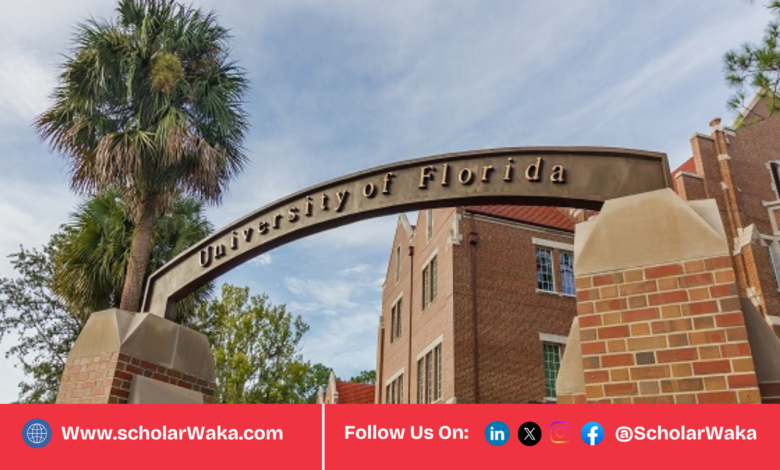
There’s a specific kind of PhD position that appeals to a very particular kind of researcher: no boots-in-the-water fieldwork, no weekend surveys, no snorkeling through rivers — just structured, hands-on quantitative work with real fisheries data, building models that genuinely inform how marine resources get managed. That’s exactly what this position at the University of Florida offers, working directly under Dr. Edward Camp on an interdisciplinary project studying how shifting marine fish populations affect fishers and the policies meant to manage them.
Don’t Miss: Top Fully Funded Scholarships for International Students
Applications were reviewed on a rolling basis, with 15 March 2026 set as the date for full consideration, and the position’s earliest possible start window, 15 August 2026, has now arrived — meaning this specific opening has very likely been filled. This guide covers exactly what the research actually involves, the technical skill set that genuinely matters here, what the funding includes, and where to look if you’re chasing a similar opportunity in this specific research group going forward.
Also, Check Out: Top Fully Funded Master’s Scholarships in Europe
What The University of Florida Graduate Scholarship Involves
This assistantship sits within an interdisciplinary research effort bringing together biological, ecological, and socioeconomic perspectives to understand a genuinely pressing problem: as ocean conditions shift, fish species are moving, and that movement is reshaping fisheries in ways that affect both the fish themselves and the fishing communities and management systems built around them.
Also Read: How to Write a Personal Statement for Scholarship | Tips and Free Template
Dr Edward Camp, an Assistant Professor of Fisheries and Aquaculture Governance at the University of Florida’s School of Forest, Fisheries, and Geomatics Sciences, leads a lab built specifically around quantitative, applied, and interdisciplinary approaches to fisheries and aquatic systems governance.
This particular position is one piece of a broader cohort effort — three to four students working on related but distinct angles of the same underlying research question, spanning biological, ecological, and socioeconomic dimensions together.
University of Florida Graduate Scholarship Summary
| Scholarship Name ⇒ | University of Florida Graduate |
| Host Country ⇒ | USA |
| Study Level ⇒ | PhD |
| Benefits ⇒ | $32,000/year salary, plus tuition and standard graduate benefits |
| Funded by ⇒ | University of Florida, School of Forest, Fisheries, and Geomatics Sciences |
| Eligible Countries ⇒ | All Countries |
| Application Deadline ⇒ | 15 March 2026 for full consideration, reviewed on a rolling basis. Earliest possible start date, 15 August 2026, has now arrived |
What Makes You Eligible for This Position
- You need an undergraduate degree in fisheries, wildlife ecology, a quantitative field, natural resources, or a closely related discipline
- A Master’s degree in fisheries, natural resources, or a related field is preferred, though not stated as an absolute requirement
- You need genuine experience with scientific research, alongside real interest in quantitative fisheries research specifically
- Demonstrated experience with quantitative fisheries work is strongly preferred — this isn’t a position for someone approaching fisheries science from a purely field-based or qualitative background
- Experience using statistical or modeling approaches such as Generalized Linear Models (GLMs), stock assessment methods, or simulation modeling, ideally in R or a similar platform, is preferred
- You need to separately, successfully apply for and be admitted to the University of Florida’s PhD program in the School of Forest, Fisheries, and Geomatics Sciences — the assistantship and your formal degree admission are two connected but distinct processes
What the Role Actually Involves
This Doctor of Philosophy (PhD) Graduate Assistantship at the University of Florida (UF) focuses on the intersection of quantitative fisheries science, human behavior, and marine policy. Rather than relying on traditional biological field collection, the position centers on high-level data modeling and socioecological synthesis:
- Quantitative Analysis of Multi-Agency Datasets: Processing and analyzing long-term, large-scale fisheries data collected by state and federal marine management agencies. The research examines spatiotemporal shifts in fish species availability and distribution driven by environmental and climatic changes.
- Human Dimensions & Fisher Adaptation Research: Investigating how commercial and recreational fishers adapt their behaviors, target preferences, harvesting strategies, and spatial effort in response to changing marine species distributions.
- Socioecological Systems Modeling: Constructing and simulating socioecological models designed to evaluate the trade-offs, risks, and performance of various fisheries management strategies and governance policies under shifting environmental baselines.
- Interdisciplinary Cohort Collaboration: Working alongside a collaborative cohort of 3–4 PhD scholars. Each member approaches the central research question from a complementary angle—biological, ecological, or socioeconomic—to build a unified, multi-dimensional assessment.
- Direct Engagement with Governance & Stakeholders: Engaging directly with regional fisheries managers, policy bodies, and local fishing communities to ensure model outputs directly inform real-world fisheries management conversations and regulatory frameworks.
- 100% Desk-Based Quantitative Research: Unlike traditional fisheries graduate positions that require physical sampling, boat work, or intensive field seasons, this position involves no fieldwork requirement. It is explicitly a desk-based, computational, and quantitative research role.
What the University of Florida Graduate Scholarship Covers
The financial support package is structured to align with standard University of Florida Graduate Assistantship guidelines while offering competitive, long-term doctoral funding:
- Annual Stipend: Recipients receive an annual stipend of $32,000 per year to cover living expenses throughout the course of their doctoral studies.
- Tuition Coverage & Benefits: The appointment includes full tuition coverage alongside standard UF graduate benefits, including university health insurance coverage.
- Workload Expectations: Formally structured at 20 hours per week, matching standard university graduate research assistantship (GRA) expectations.
- Appointment Duration & Timeline:
- Anticipated Start Window: Between August 15, 2026, and January 1, 2027.
- Anticipated Completion Window: Between August 15, 2029, and December 15, 2030 (reflecting a typical 3.5 to 4-year PhD timeline).
What Documents You Need to Prepare
Prospective candidates must assemble a comprehensive application portfolio prior to contacting the primary investigator:
- Cover Letter: A detailed personal statement outlining your specific research interests, quantitative skills, experience with socioecological systems or fisheries data, and long-term academic or professional career goals.
- Curriculum Vitae (CV): An updated resume detailing prior academic qualifications, research experience, technical competencies (such as proficiency in R, Python, GIS, or statistical modeling), publications, presentations, and relevant employment history.
- Unofficial Transcripts: Academic records from all post-secondary institutions attended, demonstrating strong coursework in quantitative disciplines, ecology, resource economics, or data science.
- Professional References: Full contact information (names, titles, institutional affiliations, email addresses, and phone numbers) for three academic or professional references who can evaluate your quantitative and analytical potential.
What the Application Process Requires
Securing this assistantship requires completing both a direct inquiry with the lab lead and a formal university application:
Step 1: Direct Application to Primary Investigator
- Assemble your cover letter, CV, unofficial transcripts, and reference list into a clear application package.
- Send all application materials (along with any preliminary questions regarding the project) directly via email to Dr. Edward Camp at
[email protected]. - Deadline Note: Priority consideration was given to applications submitted by March 15, 2026. However, review continues on a rolling basis until the position is filled.
Step 2: Formal UF Graduate Admissions Application
- Separately submit a formal application for PhD admission to the School of Forest, Fisheries, and Geomatics Sciences (SFFGS) at the University of Florida.
- Critical Requirement: Awarding of the Graduate Assistantship is contingent upon securing formal, unconditional admission into the university’s doctoral program.
What the Deadline and Timeline Actually Looked Like
- Deadline for full consideration: 15 March 2026, with applications reviewed on an ongoing, rolling basis rather than all at once
- Earliest possible start date: 15 August 2026 — this has now arrived, meaning the position has very likely already been filled if it wasn’t already
- Latest possible start date: 1 January 2027
- Expected position duration: Running through to an anticipated completion window between August 2029 and December 2030, reflecting typical PhD timelines in this field
What to Do If You’re Interested in Similar Positions
- Dr Camp’s lab has previously posted related graduate assistantships — including a separate PhD position specifically in fisheries human dimensions and governance, run jointly with Dr Chelsey Crandall — suggesting this research group regularly opens new funded positions as grants and projects develop, rather than running on a single fixed annual cycle
- If you’re building toward a position like this, focus on developing genuine, demonstrable experience with quantitative modeling tools, particularly R-based statistical and simulation work, since this was repeatedly emphasised as a preferred skill
- Reach out directly to Dr Camp to express interest in future openings, even outside an active posting, given how directly he manages the recruitment process for positions within his own lab
- Watch the American Fisheries Society Career Center and the University of Florida’s School of Forest, Fisheries, and Geomatics Sciences graduate opportunities listings, since positions like this tend to be announced through these specific channels rather than a general university-wide scholarship portal
Frequently Asked Questions
Is this specific PhD position still accepting applications?
The stated deadline for full consideration was 15 March 2026, reviewed on a rolling basis. Given the position’s earliest start date of 15 August 2026 has now arrived, this specific opening is very likely already filled.
Does this position require any fieldwork?
No. The role is explicitly structured around data analysis and modeling only, with no fieldwork component required.
Do I need a Master’s degree to apply?
Not strictly — an undergraduate degree in a relevant field is required, while a Master’s degree is preferred but not mandatory.
Is admission to the PhD program separate from the assistantship application?
Yes. You need to apply directly to Dr Camp for the assistantship, and separately secure formal admission to the University of Florida’s PhD program in the School of Forest, Fisheries, and Geomatics Sciences for final consideration.
How many students work on this broader research project?
The position is part of a cohort of three to four students, each contributing different disciplinary perspectives — biological, ecological, or socioeconomic — to the same overall research question.
Disclaimer: All position details and figures in this post are verified from official University of Florida and American Fisheries Society sources as of July 2026. Information is subject to change without notice. For current openings within this research group, contact Dr Edward Camp directly at [email protected]. ScholarWaka is not affiliated with the University of Florida.
Official Application Portal
Join ScholarWaka Community
Get the latest scholarship updates and study abroad opportunities before anyone else.