2026 University College London (UCL) Humanitarian Scholarship UK

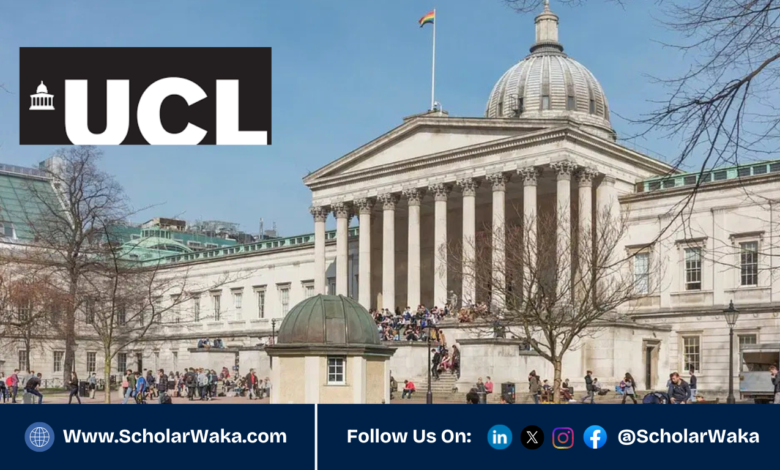
The UCL Humanitarian Scholarship 2026 application window closed on 7 May 2026 at 5 pm BST. If you’re reading this now, you’ve missed this year’s round, but that doesn’t make the programme any less worth understanding. UCL sets aside up to three awards each year for students who’ve been displaced or placed at serious risk by armed conflict, giving them a route into full-time Master’s study in London without the tuition bill or living costs standing in the way.
Also, Check Out: Top Fully Funded Master’s Scholarships in Europe
The scholarship has run on a similar yearly cycle for several years, opening in the first quarter and closing in early May, so the 2027 round is expected to follow the same pattern. This guide walks through everything you’ll need — who qualifies, what the award actually pays for, how UCL selects candidates, and what to start preparing now so you’re not scrambling when the portal reopens.
Don’t Miss: Top Fully Funded Scholarships for International Students
University College London (UCL) Humanitarian Scholarship Summary
| Scholarship Name ⇒ | University College London (UCL) Humanitarian |
| Host Country ⇒ | United Kingdom (UK) |
| Study Level ⇒ | Master’s |
| Benefits ⇒ | Full tuition fees, maintenance payment (approx. £20,000), Immigration Health Surcharge, visa fees, one return flight |
| Funded by ⇒ | University College London |
| Eligible Countries ⇒ | All countries outside the UK (candidates already resident in the UK are not eligible) |
| Application Deadline ⇒ | 2026 cycle closed 7 May 2026, 5 pm BST. Watch for the 2027 cycle to open around February–March 2027, based on previous years’ timing |
Getting to Know the Programme
This isn’t a general hardship fund — it’s a targeted award built specifically around forced displacement and conflict risk. UCL runs it through its International Master’s Awards system, meaning it sits alongside a wider pool of postgraduate funding rather than existing as a standalone scheme. Only three places are typically available per cycle, which makes it one of the more competitive humanitarian awards among UK universities, but also one of the most generous — nearly every cost of a year in London is accounted for, from tuition down to the flight home.
Also Read: How to Write a Personal Statement for Scholarship | Tips and Free Template
The award runs for the length of a standard Master’s programme, so one year for most courses, two years if your chosen programme is structured that length. It cannot be combined with any other scholarship, studentship, or bursary UCL offers, so if you’re shortlisted for this award you’ll need to decide whether to accept it in place of other funding routes you may have applied for. Candidates cannot already be resident in the UK, and if you’re already in the UK as an asylum seeker, refugee, or under a Ukraine visa scheme, UCL directs you toward different routes — the Access Opportunity Scholarship for undergraduate study, or Student Finance England loans if you’re on Homes for Ukraine, the Ukraine Family Scheme, or the Ukraine Extension Scheme.
What the UCL Humanitarian Scholarship Covers
UCL doesn’t just say “fully funded” — the award breaks down into distinct components, and it’s worth knowing exactly what each one covers before you plan a budget around it.
- Tuition fees: covered in full for the standard length of your programme
- Maintenance payment: roughly £20,000, intended to cover accommodation and day-to-day living costs across the course
- Accommodation: UCL guarantees a single room in university housing if you want it — take this option and the accommodation cost comes directly out of your £20,000 maintenance payment rather than being paid on top
- Immigration Health Surcharge and visa fees: both included, so you’re not covering your own visa costs out of pocket
- Travel: one return flight to the UK is provided
Where this scholarship differs from many “fully funded” awards is that the housing guarantee removes one of the biggest sources of stress for displaced students arriving in London with no existing support network — you know you have a room before you land.

Who Can Apply
- You must be at serious risk as a direct result of armed conflict, or have been displaced from your home country within the last three years because of armed conflict and have sought international protection outside the UK
- You must be eligible to pay UCL’s overseas fee rate
- You must come from a lower income background — UCL assesses this through its own household income guidance, not a fixed global threshold
- You must not already hold a qualification at the same level as the course you’re applying for, or higher
- You must hold an offer for a full-time Master’s programme at UCL by the scholarship panel meeting, which sits in early June
- Distance learning and part-time Master’s programmes do not qualify, regardless of how strong the rest of your application is
How UCL Selects Candidates
This is the part most competing guides skip, and it’s the part that actually determines whether you get in. UCL doesn’t run a separate application form in isolation — the scholarship application sits inside your existing Portico account, tied to an admission application you must have already submitted, references included. Once your course offer and funding application are both in, the UCL Student Funding Office reviews applications against financial need first.
Shortlisted candidates are then contacted directly and asked to submit supporting evidence — proof of financial hardship, plus formal evidence of Refugee Status or Humanitarian Protection as recognised under the 1951 UN Convention on the Status of Refugees.
Only after that evidence is reviewed does the scholarship panel make its final decision, which happens at a panel meeting in early June. Because the panel only meets once, having your course offer confirmed well ahead of the deadline gives you a real advantage — late offer holders are competing for the same three places with less runway to gather documentation.
Documents to Have Ready
- Completed scholarship application form (accessed through Portico once your admission application is active)
- Academic transcripts and certificates
- Proof of English language proficiency
- A personal statement covering your academic and professional goals
- Letters of recommendation
- A current CV
- Evidence of financial need
- Evidence of your Refugee Status or Humanitarian Protection
One practical warning: translated documents, especially transcripts and identity evidence, often take weeks to process through certified translators. If you’re planning for the 2027 cycle, start gathering and translating these documents well before the portal reopens rather than after.
How to Apply
The International Master’s Awards enable international postgraduate taught students from a diverse range of backgrounds to take up their offer of study at UCL. Listed below are the steps to apply for the academic year 2026/2027 scholarship.
You need to have submitted an admission application to UCL (including the submission of references) in order to apply for the scholarship.
NB: Please see the UCL Prospectus for information on how to apply for admission to UCL
Instructions for accessing the online scholarship application form:
- Log in to Portico with your normal details.
- Click on the ‘View’ button for the ‘Active Application’ that you wish to apply for funding for.
- In the application screen, click on ‘Funding’ in the menu at the top of the page.
- You are now on the funding page. To find out which funds you are eligible to apply for, click ‘Check and apply‘ under ‘Funds Available’.
- Click on the scholarship name of the scheme that you wish to apply for.
NB. For each Master’s programme that you wish to apply for funding for, you will need to submit a separate scholarship application form.
Please visit the International Master’s Awards page for more information on how to apply for this scholarship.
Preparing for the 2027 Cycle
Since the 2026 window has closed, the priority now shifts from applying to positioning yourself for next year. Submit your UCL admission application as early as the prospectus allows — you cannot apply for this scholarship without an active admission application already in place, and the funding page only becomes visible once that application exists. Log into Portico periodically to check for the scholarship listing under “Funding” once your application is active; UCL typically opens the funding round in the first quarter of the year.
If you’re on the Ukraine visa schemes or already have refugee status in the UK, check the Access Opportunity Scholarship or Student Finance England routes in the meantime, since this particular award is closed to UK residents. Nigerian and other Commonwealth applicants outside the UK remain fully eligible and should treat the months before the portal reopens as document-gathering time rather than waiting time.
Frequently Asked Questions
Is the UCL Humanitarian Scholarship still open for 2026?
No. The 2026 cycle closed on 7 May 2026 at 5 pm BST. Applications for the 2027 cycle are expected to open in the first quarter of 2027, based on the timing of previous years.
Can I apply if I’m already living in the UK as a refugee?
No. UCL does not accept applications from candidates already resident in the UK for this specific award. If you hold refugee status or Humanitarian Protection in the UK already, look at the UCL Access Opportunity Scholarship for undergraduate study instead.
Can Nigerian or other African students apply for this scholarship?
Yes. The scholarship is open to candidates from any country outside the UK, provided you meet the armed conflict displacement or risk criteria and the financial need requirements. There’s no restriction based on nationality or region.
Can I hold this scholarship alongside another UCL award?
No. UCL states explicitly that the Humanitarian Scholarship cannot be held alongside any other scholarship, studentship, award, or bursary.
Do I need a UCL offer before I apply for the scholarship?
Yes. You must have already submitted an admission application, including references, and this funding application runs through your Portico account under the “Funding” tab of your active application.
Disclaimer: All scholarship details, deadlines, award values, and eligibility criteria in this post were verified from official sources as of August 2026. Information is subject to change without notice. Always confirm the latest details directly on the official UCL Humanitarian Scholarship website before submitting your application. ScholarWaka is not affiliated with University College London.
Official Application Portal
Join ScholarWaka Community
Get the latest scholarship updates and study abroad opportunities before anyone else.