United Nations OHCHR Indigenous Fellowship Programme 2027 (Fully Funded)

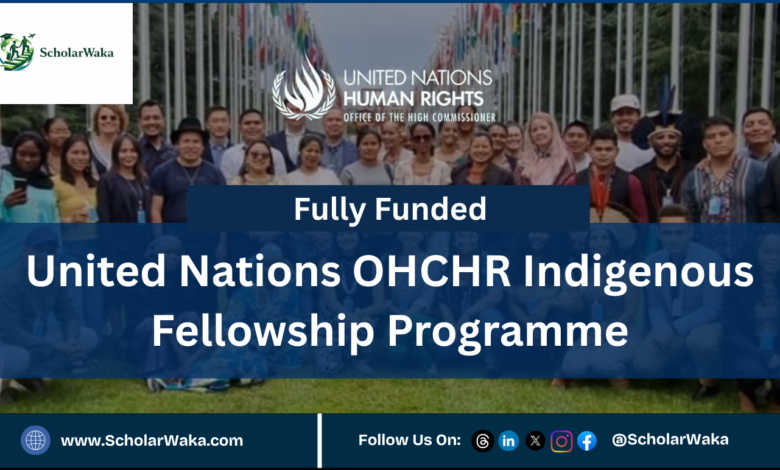
The United Nations Office of the High Commissioner for Human Rights (OHCHR) is accepting applications for its 2027 Indigenous Fellowship Programme, a fully funded four-week human rights training in Geneva that covers your flight, living expenses, and basic health insurance. The deadline is September 6, 2026 at 23:59 Geneva time. This programme is restricted to indigenous persons nominated by an indigenous organisation or community — it is not open to the general public, even to applicants with close personal ties to indigenous communities. Here’s exactly who qualifies, how the unusual selection process works, and what to submit before the deadline.
Check Out: 1st Formations Business Scholarship in the UK and USA | How to Apply
About the United Nations OHCHR Indigenous Fellowship
OHCHR launched the Indigenous Fellowship Programme in 1997, during the first International Decade of the World’s Indigenous People, to give indigenous individuals direct, working knowledge of the UN human rights system rather than secondhand or theoretical exposure to it. Fellows return to their communities and organisations equipped to engage with UN mechanisms directly, and the programme requires this in writing — you agree, as a condition of participation, to train other indigenous persons once you’re back home. The training runs in four languages — English, Spanish, French, and Portuguese — with fellows from all four language groups trained together in Geneva using simultaneous interpretation. The programme is deliberately timed to coincide with the annual session of the Expert Mechanism on the Rights of Indigenous Peoples each June or July, so fellows can engage with that body directly while they’re there.
Fellowship Summary
| Scholarship Name ⇒ | UN OHCHR Indigenous Fellowship Programme (IFP) |
| Host Country ⇒ | Switzerland (Geneva) |
| Study Level ⇒ | Fellowship, Training (for undergraduate or master’s – penultimate or final year of study) |
| Benefits ⇒ | Fully Funded — a return flight ticket, living expenses, and basic health insurance for the four-week training duration |
| Funded By ⇒ | Office of the United Nations High Commissioner for Human Rights (OHCHR) |
| Eligible Countries ⇒ | Open to indigenous persons from any country, nominated by an indigenous organization or community |
| Application Deadline ⇒ | September 6, 2026, 23:59 Geneva time |
What the United Nations OHCHR Indigenous Fellowship Covers
- A return flight ticket to Geneva
- Living expenses for the four-week training period
- Basic health insurance for the duration of the programme
Also Read: Chinese Government Scholarship-Silk Road Program at Tianjin University | Fully Funded
The training itself runs for four weeks in Geneva, timed to align with the annual session of the Expert Mechanism on the Rights of Indigenous Peoples, typically held in June or July.
United Nations OHCHR Indigenous Fellowship Required Documents
- A fully completed application form, both Part I and Part II
- An official recommendation letter from your nominating indigenous organization or community, uploaded directly to the online application
Incomplete applications are not considered, so don’t submit until you have completed every section of both parts.

Eligibility Requirements for the United Nations OHCHR Indigenous Fellowship
You must:
- Be indigenous. Non-indigenous applicants are not considered under any circumstances, even with close personal or professional links to indigenous communities or organizations.
- Be nominated by, and have your candidacy supported by, an indigenous organization or community. OHCHR notes it’s preferable if that sponsoring organization has a firm, representative constituency or membership.
- Have a good working knowledge of the language your chosen programme track is delivered in — English, Spanish, French, or Portuguese.
- Agree to train other indigenous persons in your community or organization once you return home.
Two things this programme deliberately does not require: there is no age limit, and formal education is explicitly not a barrier to participation, given how often socio-economic conditions restrict indigenous peoples’ access to formal schooling. Women, LGBTQI+ individuals, and persons with disabilities from indigenous communities are specifically encouraged to apply.
See Also: Macquarie University Road to Research Scholarship in Australia | How to Apply
The Selection Process
This programme’s selection process works differently from most fellowships, and it’s worth understanding before you apply. Previous indigenous fellows — not OHCHR staff — carry out the first round, pre-selecting 15 to 20 candidates per language group. Pre-selected candidates are then interviewed, and a final advisory group made up of OHCHR staff reviews and confirms the successful candidates. Throughout the process, OHCHR weighs gender balance, regional balance, balance across different indigenous communities, and the general human rights situation in each candidate’s country or region.
One detail matters for managing your own expectations: only pre-selected candidates are contacted. Given the volume of applications, if you don’t hear back, that is effectively your answer — there’s no separate rejection notice.
Application Process for the United Nations OHCHR Indigenous Fellowship
OHCHR’s official instructions include some overlapping guidance worth being aware of: the page describes signed physical copies sent by post, scanned copies sent by email, and a direct online application form, without fully clarifying which method is currently required. Given the online form has a specific link and an explicit deadline attached to it, treat that as your primary route, and email [email protected] directly if you want to confirm whether a signed postal or scanned copy is still expected alongside it.
- Complete the online application form, including both Part I and Part II.
- Upload your official recommendation letter from your nominating indigenous organisation or community directly to the online form.
- Submit well before the deadline. OHCHR explicitly recommends this rather than waiting until the final days.
- Confirm submission requirements directly with OHCHR if you’re unsure whether a physical or scanned copy is also needed for your application.
Check Out: University of Birmingham Business School Masters Scholarships in UK | How to Apply
Application Deadline
The deadline is September 6, 2026 at 23:59 Geneva time. Because this fellowship requires a recommendation letter from a nominating organization — not something you can produce yourself at the last minute — start that conversation with your community or organization well ahead of the deadline. OHCHR itself explicitly recommends submitting early rather than close to the cutoff.
Frequently Asked Questions
Does being Nigerian or African automatically qualify me as “indigenous” for this programme?
No. “Indigenous” in this context refers to a specific status under UN human rights frameworks — generally communities with historical continuity to a territory, distinct social and political systems, and a self-identified indigenous status recognized by their own organizations. Being African or Nigerian does not by itself meet this bar; you would need to belong to, and be nominated by, a specifically indigenous organization or community, which is a narrower category than nationality or ethnicity alone.
Can I apply without being nominated by an organization?
No. Nomination and support from an indigenous organization or community is a formal requirement, not a recommendation. Without it, your application isn’t eligible for consideration.
What happens if I don’t hear back after applying?
Only pre-selected candidates are contacted, given how many applications OHCHR receives. If you don’t hear anything, treat that as your outcome rather than waiting indefinitely for a rejection notice.
Read Also: New Silk Road Scholarship in China | How to Apply
Do I need a university degree to apply?
No. The programme explicitly states that formal education should not be a barrier to participation, recognizing the socio-economic conditions that limit many indigenous peoples’ access to formal schooling.
Which language should I apply under if I speak more than one of the four programme languages?
Apply under the language you have the strongest working knowledge of, since the programme requires this for effective participation in training and discussions. The specific language track doesn’t appear to affect your chances of selection, since pre-selection happens separately within each language group.
Disclaimer: All fellowship details, deadlines, benefits, and eligibility criteria in this post were verified from official sources as of August 2026. Information is subject to change without notice. Always confirm the latest details directly on the official OHCHR website before submitting your application. ScholarWaka is not affiliated with the Office of the United Nations High Commissioner for Human Rights.
Official Application Portal
Join ScholarWaka Community
Get the latest scholarship updates and study abroad opportunities before anyone else.