From Financial Struggle to Fully Funded Scholarship: How Opeyemi Afuwape Won the Mastercard Foundation Scholarship

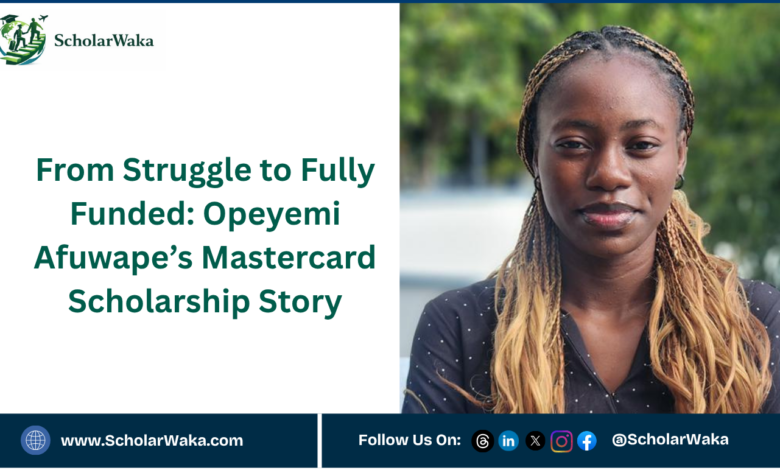
Opeyemi Afuwape, a 19-year-old from Alimosho, Lagos State, Nigeria, is now studying BSc. (Hons) Entrepreneurial Leadership at the African Leadership College of Higher Education (ALCHE) in Mauritius on a fully funded bachelor’s Mastercard Foundation Scholarship.
Opeyemi is the first child of her parents, and for much of her early life, she lived with her grandparents rather than at home. “Because of financial struggles, I usually changed from school to school,” she says of those years — a pattern of instability common to many low-income households, where moving means starting over academically each time. By her own account, she had to repeat classes in secondary school as a result.
But before the Mastercard Scholarship offer letter, there were years of rejection emails, a Nigerian Joint Admissions and Matriculation Board (JAMB) attempt that didn’t lead anywhere, and long stretches of simply not believing the story of her life could change.
Her win matters not just because it’s fully funded where her full tuition, feeding, accommodation, a monthly stipend, and even flights and visa costs are covered – but because of how ordinary her starting point was, and how deliberately she worked to change her odds.
Where the Story Started
“I started at a point where I did not really believe in myself,” Opeyemi says. She had just finished high school and had no clear idea what would come next. University admission fell through, and her parents suggested something different: go learn a skill first. That decision took her to the Community Innovation Hub in Lagos State, Nigeria.
She arrived knowing almost nothing about computers. “I had a laptop, but I did not even know how to properly use a computer,” she recalls. Little by little, that changed. She picked up graphic design, UI/UX design, and other tech skills, and found she genuinely enjoyed learning them – enough that when it was time to write JAMB the following year, she says she “did not even want to leave the tech hub.”
The JAMB attempt did not lead to admission. She tried other schools. None of them worked out. So she went back to the hub.
Learning What Rejection Actually Meant
It was at the Community Innovation Hub, as an intern, that Opeyemi began to see the wider world of opportunities like scholarships, internships, fellowships – being shared in her community group. She started applying. And then the rejections started coming.
“The funny thing is that at first, I did not even know what rejection meant. I would see the email and just move on,” she says. “But later, when I understood what it meant and the rejections kept coming, it became painful.” At the height of it, she remembers getting as many as five or seven rejections in a single week. There was one school in particular she wanted badly. When the answer was no, she cried, and questioned herself repeatedly.
She says what kept her upright through that stretch was a mix of self-talk and community. “I would tell myself, ‘You know your goals. You know where you want to be. Keep going.'” She leaned on mentors who reminded her, over and over, that rejection is part of the journey — not a verdict on her. And she kept doing the two things she says never stopped feeling worth it: learning, and volunteering in her community.
By her own count, she applied to roughly three scholarships that didn’t work out before this one, and to what she estimates as around a thousand general opportunities in total. “You won’t be able to count the rejections you had,” she says, “but you can count your wins.”
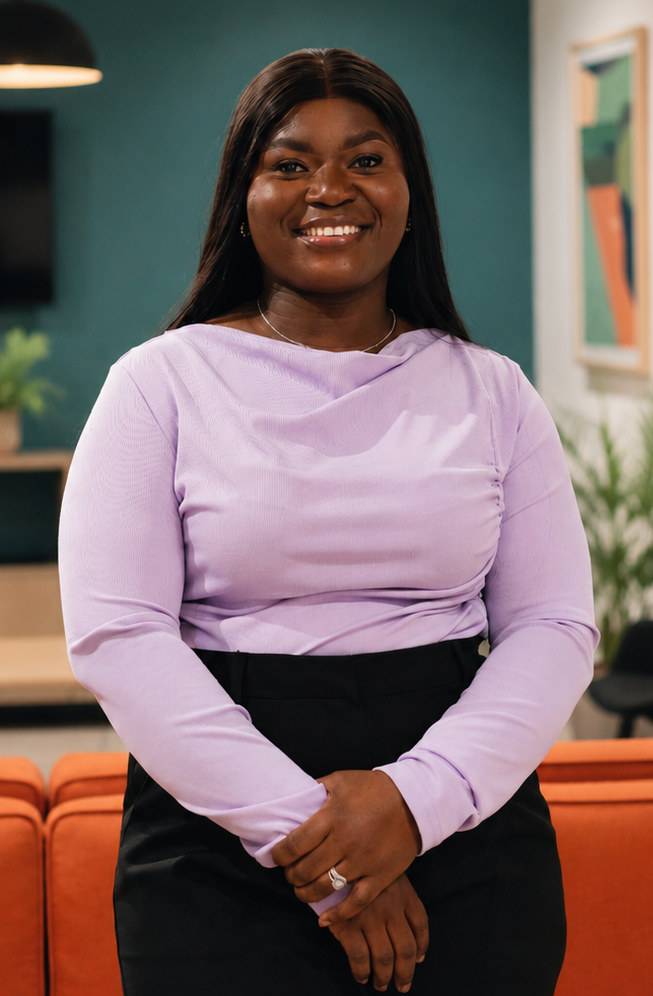
The Application That Finally Worked: Mastercard Foundation Scholarship
When Opeyemi applied to ALCHE for the fully funded Mastercard Foundation Scholarship, she says she approached it differently from every application before it. Instead of a conventional application, she pulled together everything she had actually done and critically, everything she could prove.
“One thing that stood out for me was that I’ve had so many rejections, and most times I didn’t even understand why it kept happening,” she says. “But this time, I did something differently by showing all the things I have documented concerning my social impact and used it properly in my application as proof of my journey, especially my consistent involvement in giving back to my community.”
That documentation habit – posting the schools she’d visited, the students she’d taught, the certificates she’d earned to her LinkedIn and Instagram as she went along, not after the fact – became the evidence base for her essay and video application. Her recommendation letters, drawn from mentors who could speak directly to that work, backed up the same story rather than a generic one.
The admission process itself moved quickly: about one to two weeks for a decision. The financial aid stage, where the real scrutiny happens — bank statements, proof of school fees, guardian documents, a short essay and a video, all checked for consistency took about a month. There was no interview. “There’s nothing like an interview,” she says. “What you are going to do is write essays, you have to write about your financial aid. From there, you get it.”
Opeyemi is on the February intake, one of two entry points ALCHE offers each year (the other being October). Her scholarship covers tuition in full, a monthly stipend, feeding, accommodation, visa costs, and travel — meaning, as she put it during her interview, “everything is basically covered.” Students on the scholarship are also placed into internships during their four years of study, a feature she says helped shape her decision to commit fully once the offer came through.
You can find the full breakdown of eligibility, required documents, and how to apply for the ALCHE Mastercard Foundation Scholarships in Mauritius (Fully Funded).
What She’s Building Alongside Her Studies
Outside the classroom, Opeyemi is the co-founder of Eco City Vision, a youth-led organisation focused on climate action and sustainability. Through it, she and her team have educated hundreds of students across schools in Lagos, Nigeria on climate action and sustainable practices, and run a project turning old jeans into school bags for students who would otherwise carry nylon.
That work wasn’t a side note in her application – it was the center of it. When asked what “talking about who you are” meant in her essay, she was clear it wasn’t about listing hardship. “I think about my passion — through leadership, through sustainability and climate action, what I want to do for the next generation, what I want to become,” she says. “So I basically just talk about it, and probably the wins I’ve gotten — getting to global ambassador, the Millennium Fellowship — I just talk about my project that I’ve done during those periods, and people that I’ve worked with, I’ve volunteered with.”
Her Advice to Applicants Still Waiting for a Yes
Opeyemi’s tips for anyone currently in the trenches of scholarship applications are practical, not motivational-poster material:
- Start early and document everything. Don’t wait for an application to appear before you start building a record of what you’ve done.
- Don’t just mention things – show impact. Certificates, photos, videos, and social media posts of your actual work carry more weight than a claim on paper.
- Be ready for rejections, but don’t give up. They are part of the process, not a judgment on whether you belong.
She’s also blunt about consistency in your application: if your application says your family eats once a day, that story needs to hold up everywhere else in the application – your essay, your video, and the people who write your recommendation letters. “Whatever you’re doing, your story should and must be consistent,” she says.
Most of all, her message to anyone reading this while nursing a fresh rejection is simple: “Everybody has a purpose in life. During this process, just keep being who you are, keep showing up, document every little thing you have done, and talk about it.”
Frequently Asked Questions (FAQ)
How did Opeyemi Afuwape win the Mastercard Foundation Scholarship for the 2026 intake?
She rebuilt her application around proof rather than claims — documenting her community work with Eco City Vision (photos, videos, certificates, and consistent posts on LinkedIn and Instagram) and weaving that evidence into her essay, video application, and recommendation letters, instead of relying on a generic personal statement.
How many times was Opeyemi rejected before winning this Mastercard Foundation Scholarship?
By her own count, she applied to roughly three scholarships that didn’t work out before this one, plus an estimated one thousand general opportunities (internships, fellowships, and other programmes) over the years. At the height of it, she says she sometimes received five to seven rejection emails in a single week.
What is Opeyemi studying, and where?
She’s studying BSc. (Hons) Entrepreneurial Leadership at the African Leadership College of Higher Education (ALCHE) in Mauritius, on a fully funded Mastercard Foundation Scholarship covering tuition, monthly stipend, meals, accommodation, visa costs, and travel.
What intake is Opeyemi on?
Opeyemi is on the February 2026 intake, one of two entry points ALCHE offers each year (the other being October).
What does the Mastercard Foundation Scholarship cover?
Her scholarship covers tuition in full, a monthly stipend, feeding, accommodation, visa costs, and travel — meaning, as she put it during her interview, “everything is basically covered.” Students on the scholarship are also placed into internships during their four years of study, a feature she says helped shape her decision to commit fully once the offer came through.
Did Opeyemi attend a formal interview as part of the scholarship process?
No. The Mastercard Foundation Scholarship process at ALCHE does not include a formal interview. Applicants apply for admission first, then — if approved — receive a link to apply separately for financial aid, which involves an essay, a video application, and supporting documents.
What is Eco City Vision?
Eco City Vision is the youth-led climate action and sustainability organisation Opeyemi co-founded in Lagos, Nigeria. It has educated hundreds of students across Lagos schools on climate action and sustainable practices, including a project that turns old jeans into school bags for students who would otherwise carry nylon.
What advice does Opeyemi give to students from low-income backgrounds applying for scholarships?
She encourages applicants to be honest about their background without treating hardship as the whole story — pairing that honesty with clear evidence of impact, however small. Her core advice: start early and document everything, show impact rather than just claiming it, and expect rejection as part of the process rather than a verdict on your worth.
How do I apply for the Mastercard Foundation Scholarship at ALCHE?
You can find the full breakdown of eligibility, required documents, and how to apply on ScholarWaka’s dedicated guide: ALCHE Mastercard Foundation Scholarships in Mauritius (Fully Funded).
Join ScholarWaka Community
Get the latest scholarship updates and study abroad opportunities before anyone else.