Queensland University of Technology PhD Scholarships 2026 in Australia

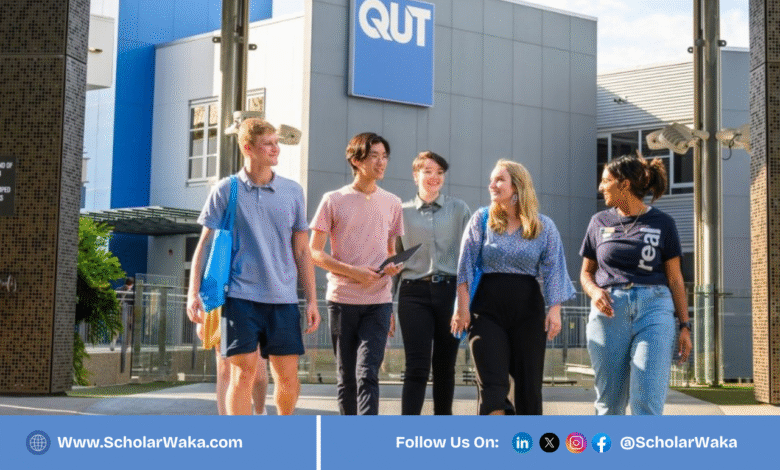
Queensland University of Technology offers a fully funded PhD scholarship, supervised by device physicist Associate Professor Soniya Yambem, researching organic mixed ionic-electronic conductors (OMIECs) — materials that conduct both electrons and ions, with real applications in biosensors, neuromorphic devices, and environmental monitoring.
Don’t Miss: Top Fully Funded Scholarships for International Students
The specific round advertised with a September 30, 2025 deadline, targeting a March 2026 start, has closed, and that cohort would already be well into their first year of study. However, A/Prof Yambem’s own academic profile continues to state that PhD positions are available in this research area and invites direct email contact — which means this isn’t necessarily a closed door, just not tied to a fixed, repeatable annual deadline the way a large scholarship programme would be. This guide covers the research itself, who genuinely fits, and how to approach an individual supervisor-led recruitment like this one.
Also, Check Out: Top Fully Funded Master’s Scholarships in Europe
About the Research and Supervisor
This is a genuinely specialised PhD project, not a broad scholarship open to any research topic. OMIECs are organic, carbon-based materials with a distinct advantage over conventional semiconductors — they’re soft, flexible, and often solution-processable, while still combining the ability to conduct electronic charge carriers and mobile ions simultaneously.
Also Read: How to Write a Personal Statement for Scholarship | Tips and Free Template
The project specifically explores transport phenomena in these materials under varying conditions, aimed at applications in biosensing, neuromorphic interfaces, and environmental monitoring technology. A/Prof Yambem, who leads QUT’s Bioelectronics and Biosensors Research Group, brings direct expertise in organic electronic devices — she’s worked on organic solar cells, OLEDs, and organic transistors throughout her career, including postdoctoral research at the University of Queensland’s Centre for Organic Photonics and Electronics before joining QUT’s faculty in 2018.
The project is co-supervised by Dr Mahboobeh Shahbazi and Dr Wendy Purches, the latter based externally at CSIRO — Australia’s national science research agency — giving the successful candidate exposure to both university and national research institution environments. Candidates work across QUT’s Faculty of Science, School of Chemistry and Physics, and Centre for Materials Science, alongside the dedicated Bioelectronics and Biosensors group itself.
Queensland University of Technology PhD Scholarships Summary
| Scholarship Name ⇒ | Queensland University of Technology PhD |
| Host Country ⇒ | Australia |
| Study Level ⇒ | PhD |
| Benefits ⇒ | AUD 40,000/year tax-free stipend (up to 3.5 years) plus tuition fee sponsorship (up to 4 years) |
| Funded by ⇒ | Queensland University of Technology |
| Eligible Countries ⇒ | All Countries |
| Application Deadline ⇒ | Original round closed September 30, 2025 (March 2026 start). A/Prof Yambem’s profile currently indicates continued interest in PhD candidates for this research area — contact her directly to confirm current status |
Who This Project Genuinely Fits
- You need to meet QUT’s standard PhD entry requirements, including English language proficiency where applicable.
- You need to be able to enrol as a full-time, internal (on-campus) student, unless part-time or external study is separately approved — this isn’t set up as a remote or distance PhD by default.
- You need a strong academic background in one or more of: physics, materials science, nanotechnology, or electronic engineering.
- You need a genuinely clear understanding of semiconductor physics and devices — this is a technical prerequisite the project is explicit about, not a general interest in materials science broadly.
- Given the experimental nature of the project, real hands-on laboratory experience with device fabrication or testing strengthens an application meaningfully, even though it isn’t stated as an absolute requirement.
What the Scholarship Provides
- An AUD 40,000 annual stipend, tax-free, for up to 3.5 years of full-time PhD study, with a possible 6-month extension if approved — a genuinely competitive stipend among Australian PhD scholarships.
- Tuition fee sponsorship covering up to 4 years, extending slightly beyond the stipend period to give some buffer at the end of the programme.
- Direct supervision from a working device physicist actively publishing in this field, alongside co-supervision spanning both QUT and CSIRO — giving the candidate exposure to national research infrastructure beyond the university itself.
- Access to a fully functional device fabrication and testing laboratory, which A/Prof Yambem personally established and benchmarked at QUT specifically for organic electronic device research — this isn’t shared, general-purpose lab space, but infrastructure built for exactly this kind of work.
- Placement within an active, established research group — the Bioelectronics and Biosensors Research Group — rather than working in isolation as a sole PhD candidate on a standalone project.

Documents to Prepare
Securing a Higher Degree by Research (HDR) place and a fully funded scholarship—such as the Australian Government Research Training Program (RTP) or the QUT Postgraduate Research Award (QUTPRA)—requires submitting an Expression of Interest (EOI) prior to formal application.
All supporting documentation must be uploaded to the QUT Application Portal as clear, high-resolution PDF files. Documents issued in languages other than English must be accompanied by an official certified English translation.
1. Research-Focused Curriculum Vitae (CV) / Resume:
- Structure: Detailed academic CV emphasizing research track record.
- Essential Content: Include prior research employment, peer-reviewed journal publications, conference presentations, academic awards, technical software/laboratory skills, and master’s thesis details.
- Employment Proof: Work experience cited as research evidence must be backed by official employer statements on company letterhead indicating duties, full-time/part-time equivalency, and exact employment dates.
2. Academic Transcripts, Graduation Certificates, & Grading Scales:
- Scope: Scans of official transcripts and award certificates for all completed undergraduate (Honours level or equivalent) and postgraduate degrees.
- Grading Scale Key: Must explicitly include your university’s official grading scale interpretation guide (usually printed on the back page of transcripts) to allow QUT to calculate your equivalent Grade Point Average (GPA).
3. English Language Proficiency Certification:
- Validity: Test results must be dated within 2 years of the application cutoff date.
- Accepted Standard Tests:
- IELTS Academic: Minimum 6.5 overall (with no individual sub-score below 6.0).
- TOEFL iBT: Minimum total score of 79 (Reading 16, Listening 16, Speaking 18, Writing 21; QUT TOEFL Institution Code: 9778).
- PTE Academic: Minimum total score of 58 (no sub-score below 50).
- Exemptions: Applicable if prior tertiary studies were completed entirely in English within an exempted English-speaking country.
4. Motivation Letter / Supervisor Correspondence & Cover Email:
- Target: Outlines your research background, specific interest in the chosen project/scholarship, and alignment with QUT’s research strengths.
- Supervisor Alignment: Demonstrates prior engagement with your proposed QUT principal supervisor who has agreed in principle to support your EOI.
5. Faculty-Specific Research Proposal (Mandatory Core Attachment):
- Format Requirement: Must strictly follow the official QUT Research Proposal Template corresponding to your specific faculty (e.g., Faculty of Science, Faculty of Engineering, Business & Law, or Health).
- Key Components: Detail project title, research objectives, literature review, proposed methodology, ethics considerations, resource requirements, and industry alignment/impact potential.
6. Academic & Professional Referee Details:
- Requirement: Contact details for two (2) academic referees who have directly supervised your past research (e.g., Honours or Master’s thesis supervisor).
- Submission System: Referees receive an automated direct link from QUT to submit confidential reports rating your research aptitude and academic performance.
7. Identity Verification & Proof of Citizenship:
Document: High-resolution color scan of the biographical data page of your valid international passport, birth certificate, or citizenship certificate.
How to Approach This — Given the Individual Supervisor Model
- Email A/Prof Soniya Yambem directly at [email protected] before doing anything else. This is a hard first step for this specific project — you cannot proceed to a formal application without her direct support first.
- In that email, clearly detail your academic and research background, your specific motivation for researching in this field, and attach your CV. Generic interest in PhD study broadly, without engagement with OMIECs or semiconductor physics specifically, is unlikely to get a response.
- If she supports your application, she’ll guide you toward submitting an Expression of Interest (EOI) for a QUT research degree — this is the formal next step, not something you complete independently first.
- In your EOI, nominate A/Prof Yambem as your proposed principal supervisor, and include the scholarship’s URL in the financial details section (Question 2) — this links your EOI to the correct funding source.
- Submit your EOI and research degree application together, rather than as two separate, disconnected processes.
- Given that the specific advertised round has closed, confirm current availability and next steps directly with A/Prof Yambem by email rather than assuming a fixed deadline applies — her profile continues to indicate she’s recruiting for this research area, but timing and process details are best confirmed directly.
Frequently Asked Questions
Is this specific scholarship still open for applications?
The round advertised with a September 30, 2025 deadline has closed, and that cohort has already started. However, A/Prof Yambem’s own profile continues to state that PhD positions are available in this research area, so contacting her directly is the most reliable way to find out the current status.
Can international students, including African applicants, apply?
Yes. This scholarship is open to all countries, with eligibility based on academic background and research fit rather than nationality.
Do I need to already have a Master’s degree to apply?
This isn’t stated as an explicit requirement in the scholarship details, but you do need to meet QUT’s standard PhD entry requirements — check these directly with QUT’s graduate research office, since PhD entry requirements can vary based on your prior qualifications and country of study.
Is remote or part-time study an option?
Not by default. The scholarship expects full-time, internal (on-campus) enrolment, though part-time or external study can be considered with separate approval.
What happens if A/Prof Yambem doesn’t respond, or doesn’t support my application?
This is a competitive, individually-assessed process — she’s evaluating direct fit with the specific research project, not processing applications through a general committee. If your background doesn’t closely align with OMIECs, semiconductor physics, or the specific technical areas involved, it’s worth looking at QUT’s broader PhD scholarship listings for a better fit rather than this specific project.
Disclaimer: All scholarship details, deadlines, and eligibility criteria in this post were verified from Queensland University of Technology’s official website and academic profile pages as of August 2026. Because this project is tied to an individual supervisor’s ongoing recruitment rather than a fixed annual cycle, always confirm current availability directly with A/Prof Soniya Yambem before applying. ScholarWaka is not affiliated with Queensland University of Technology.
Official Application Portal
Join ScholarWaka Community
Get the latest scholarship updates and study abroad opportunities before anyone else.