University of Toronto Mastercard Foundation Doctor of Public Health Scholarship 2027–2028 | Fully Funded

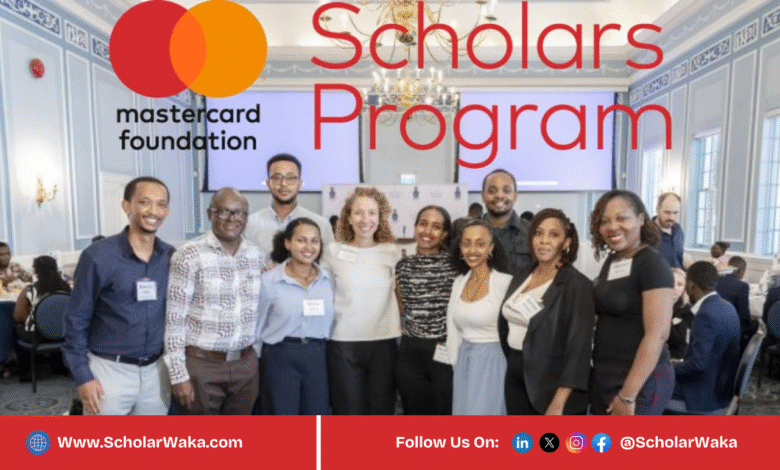
The University of Toronto, in partnership with the Mastercard Foundation, is currently accepting applications for its Doctor of Public Health (DrPH) scholarship, offering up to three fully funded places for the 2027-2028 academic year. This is a professional doctorate specifically for graduates and graduating students from Africa Health Collaborative partner universities across Sub-Saharan Africa, covering tuition, travel, housing, food, books, and living expenses for the full duration of the four-year programme.
Also, Check Out: Top Fully Funded Master’s Scholarships in Europe
The version some guides describe, for 2026-2027, closed in October 2025 — but the Africa Health Collaborative has now opened the next cycle, with the University of Toronto’s DrPH programme application due November 20, 2026. This guide walks through the full process for the current, open cycle.
Don’t Miss: Top Fully Funded Scholarships for International Students
About the University of Toronto Mastercard Foundation Doctor of Public Health Scholarship
This scholarship sits inside a broader collaboration between the Mastercard Foundation and a defined network of African universities called the Africa Health Collaborative, rather than being open to graduates from any African institution. That distinction matters immediately: eligibility isn’t simply “graduated from an African university in a health field” — it’s specifically tied to graduating from one of the Collaborative’s partner institutions.
Also Read: How to Write a Personal Statement for Scholarship | Tips and Free Template
The degree is the Doctor of Public Health (DrPH) at the University of Toronto’s Dalla Lana School of Public Health. It is a professional doctorate focused on leadership development, health systems strengthening, policy analysis, and governance rather than purely research-based study.
The programme runs full-time for four years, and scholars must return home during the final two years to contribute to public health development in their home countries. This requirement forms part of the selection criteria. With only up to three scholarships awarded per cycle, it ranks among the more selective opportunities on ScholarWaka, and its collaborative structure means your eligibility depends heavily on your university of graduation.
University of Toronto Mastercard Foundation Doctor of Public Health Scholarship Summary
| Scholarship Name ⇒ | University of Toronto Mastercard Foundation Doctor of Public Health |
| Host Country ⇒ | Canada |
| Study Level ⇒ | PhD |
| Benefits ⇒ | Full tuition, housing, living allowance, travel, and academic materials |
| Funded by ⇒ | Mastercard Foundation, via the University of Toronto and Africa Health Collaborative |
| Eligible Countries ⇒ | African Countries |
| Application Deadline ⇒ | 2027-2028 cycle is open now. Mastercard Foundation doctoral scholarship application deadline to be confirmed via information sessions; downstream DrPH programme application due November 20, 2026 |
Who Can Apply
- You must be a citizen of a Sub-Saharan African country, and currently residing there — both conditions apply together, not one or the other.
- You need to have graduated, or be graduating, from a university that’s a formal partner of the Africa Health Collaborative — this is the eligibility line most likely to disqualify strong candidates from non-partner institutions, so confirm your university’s partner status directly before investing time in the application.
- You must not have already begun doctoral studies at the time of application — this scholarship is specifically for the transition into a doctorate, not for students already partway through one elsewhere.
- You need a demonstrated record of strong academic performance and leadership during both your undergraduate and Master’s studies.
- You must be independently admissible to the University of Toronto’s DrPH programme — the Mastercard Foundation scholarship and the university’s own academic admission are two separate hurdles that both need to be cleared.
- You must demonstrate a genuine commitment to returning to your home country during the final two years of the programme and contributing to public health development there. The selection process assesses this commitment directly rather than assuming it.
What the Scholarship Provides
The Mastercard Foundation Scholars Program at the University of Toronto (U of T)—administered through the Dalla Lana School of Public Health (DLSPH)—offers a fully funded financial package paired with comprehensive, wrap-around scholar support.
Designed to develop transformational public health leaders from Africa, the award ensures that Doctor of Public Health (DrPH) candidates can focus entirely on their doctoral studies, field placements, and applied research without financial constraint or administrative friction.
1. Financial Coverage & Direct Educational Funding
- Full Program Tuition & Academic Fees:
- Scope: Covers 100% of international tuition costs for the complete four-year duration of the Doctor of Public Health (DrPH) degree program.
- Mandatory Student Fees: Includes all required institutional student fees, campus service costs, laboratory access, and administrative registration charges levied by the University of Toronto.
- Comprehensive Housing & Monthly Living Stipend:
- Housing Allowance: Fully covers secure, high-quality residential accommodation (either on-campus graduate housing or managed off-campus living facilities in Toronto).
- Living & Meal Allowance: Provides a recurring monthly stipend to cover food, groceries, daily transportation within the Greater Toronto Area (GTA), personal upkeep, and routine living expenses.
- Academic & Material Allowance: Includes dedicated funding allocations for textbooks, academic software licenses, laptop/technology requirements, and course materials.
- International Travel & Relocation Expenses:
- Economy Airfare: Direct coverage of round-trip international flights between the scholar’s home country in Africa and Toronto, Canada, at the beginning and conclusion of the four-year program.
- Relocation & Visa Processing Support: Coverage for study permit fees, biometrics processing, entry visas, and immediate settling-in stipends upon arrival in Canada.
- Comprehensive Health & Medical Coverage:
- UHIP & Supplementary Health: Full coverage under the University Health Insurance Plan (UHIP) and supplementary graduate student health/dental care, ensuring complete medical, emergency, prescription, and mental health coverage throughout the program.
2. Institutional, Transition & Sustained Support Systems
- Pre-Departure & Arrival Orientation:
- Arrival Coordination: Dedicated airport pickup services and guided settlement into Toronto housing.
- Targeted Onboarding: Structured orientation sessions covering Canadian academic expectations, navigating Toronto’s climate and city infrastructure, banking setup, and cultural adjustment.
- Sustained Four-Year Academic & Professional Support Network:
- Peer & Alumni Mentorship: Pairings with senior doctoral scholars, faculty advisors, and Mastercard Foundation Alumni networks for ongoing professional guidance.
- Skill Development & Leadership: Access to specialized workshops covering public health policy design, qualitative and quantitative research methodologies, grant writing, and leadership training.
- Field Placement & Applied Research Support: Facilitated placement support for the DrPH program’s mandatory practical leadership field projects across public health institutions in Canada and Africa.

Documents to Prepare
Applying for the Mastercard Foundation Doctor of Public Health (DrPH) Scholarship at the Dalla Lana School of Public Health (DLSPH) requires a two-stage document submission. Candidates submit preliminary scholarship verification documents during the initial screening stage, followed by the complete academic application package to the University of Toronto’s School of Graduate Studies (SGS) if shortlisted.
All files must be submitted electronically as high-resolution PDF documents (.pdf).
1. Core Academic & Identification Documents
- Undergraduate & Master’s Degree Certificates:
- Academic Proof: Official degree certificates proving completion of both a Bachelor’s degree and a Master’s degree (in Public Health, Health Sciences, or a related discipline).
- Partner University Standard: Must show graduation from an eligible Africa Health Collaborative partner university.
- Official Academic Transcripts:
- Coverage: Complete, official transcripts detailing course titles, credits, and semester-by-semester grades for both Bachelor’s and Master’s programs.
- Grading Key: Must include the issuing university’s official grading scale key to allow equivalent Grade Point Average (GPA) evaluation against University of Toronto standards (minimum B+ standing in graduate work).
- Proof of Sub-Saharan African Citizenship:
- Primary Identification: Clear scan of the biographical data page of a valid International Passport.
- Alternative Identification: Official National Identity Card confirming legal citizenship in an eligible Sub-Saharan African nation.
- Proof of Current Residence in Sub-Saharan Africa:
- Timeframe & Verification: Document issued within the last 12 months confirming current physical residence in a Sub-Saharan African country.
- Accepted Documents: Official municipal certificate of residence, utility bill in the applicant’s name, or formal employer/institutional attestation letter confirming physical address.
2. Narrative, Professional & Institutional Attachments
- Public Health & Leadership-Focused CV / Résumé:
- Format & Length: Structured 2–3 page document detailing professional experience.
- Core Focus Areas: Must highlight a minimum of 3–5 years of mid- to senior-level leadership experience in public health practice, health system management, or policy formulation.
- Three Confidential Letters of Recommendation:
- Referees: Two academic references (former thesis advisors or professors) and one professional reference (a senior public health supervisor/employer).
- Focus: Must speak to the applicant’s strategic leadership potential, academic rigor, and capacity for health-system transformational impact.
- Motivation Statement & Re-Integration Plan (Core Scholarship Essay):
- Career Alignment: Narrative detailing specific career trajectories and how the DrPH program advances those goals.
- Return & Commitment Plan: Explicit layout of how the candidate will fulfill the mandatory commitment to return to their home country/Africa for the final two years of the program to drive public health policy and economic development.
- English Language Proficiency Evidence (If Applicable):
- Institutional Test Scores: Official results from IELTS Academic (minimum 7.5 overall, 7.0 per band) or TOEFL iBT (minimum 100 overall, 22+ in writing) taken within 2 years.
- Exemption: Valid if the prior Master’s degree was earned from an accredited institution where English is the primary language of instruction.
- DrPH Program Supplementary Forms & Portfolio:
- Statement of Intent / Practice Proposal: A specialized project statement outlining the candidate’s proposed public health leadership field focus.
- SGS Online Application Form: Formal graduate application completed via the University of Toronto School of Graduate Studies portal upon receiving shortlist nomination.
How to Apply — Step by Step
- Confirm your university’s status as an Africa Health Collaborative partner institution before anything else — this single eligibility line determines whether you can apply at all, regardless of your academic strength.
- Review the University of Toronto DrPH programme’s admission requirements directly to confirm you’re independently admissible on academic grounds.
- Register for and attend one of the mandatory virtual information sessions. Attendance at one session is a hard eligibility requirement, and the application link itself is typically only provided during these sessions.
- Complete the Mastercard Foundation Doctoral Scholarship application form once you have the link from the information session.
- Submit your scholarship application by the stated deadline — check the Africa Health Collaborative’s official page directly for the exact 2027-2028 date, since it’s set separately from the downstream university deadline.
- If shortlisted for the Mastercard Foundation scholarship, you’ll then need to submit a formal application to the University of Toronto’s DrPH programme by November 20, 2026 — this is a confirmed date for the current cycle, following Dalla Lana School of Public Health’s specific instructions for supplementary materials.
- For any questions throughout the process, contact the Global Health Office at Dalla Lana School of Public Health directly: [email protected].
Frequently Asked Questions
Is this scholarship currently open?
Yes. The Africa Health Collaborative has confirmed the 2027-2028 cycle is open, with the University of Toronto’s DrPH programme application due November 20, 2026, for scholars shortlisted through the Mastercard Foundation scholarship process.
Can any African university graduate apply, or only specific ones?
Only graduates of Africa Health Collaborative partner universities are eligible. This is a defined network, not open to graduates from any African institution — confirm your university’s status directly before applying.
Do I need to already be admitted to the DrPH programme before applying for the scholarship?
No, but the two processes are connected. You first apply for the Mastercard Foundation Scholarship, and if you are shortlisted, you then receive an invitation to submit a formal application to the University of Toronto’s DrPH programme.
Can I apply if I’ve already started a doctoral degree elsewhere?
No. Eligibility specifically requires that you have not yet begun doctoral studies at the time of application.
Is there really a return-to-Africa requirement, or is that just encouraged?
It’s a genuine, assessed part of the eligibility and selection process — the scholarship specifically looks for demonstrated commitment to returning home during the final two years of the programme to contribute to public health development, not simply general interest in African health systems.
Disclaimer: All scholarship details, deadlines, and eligibility criteria in this post were verified from the Africa Health Collaborative and the University of Toronto’s official sources as of August 2026. Information is subject to change without notice. Always confirm the latest details directly on the Africa Health Collaborative’s official website before applying. ScholarWaka is not affiliated with the University of Toronto or the Mastercard Foundation.
Official Application Portal
Join ScholarWaka Community
Get the latest scholarship updates and study abroad opportunities before anyone else.