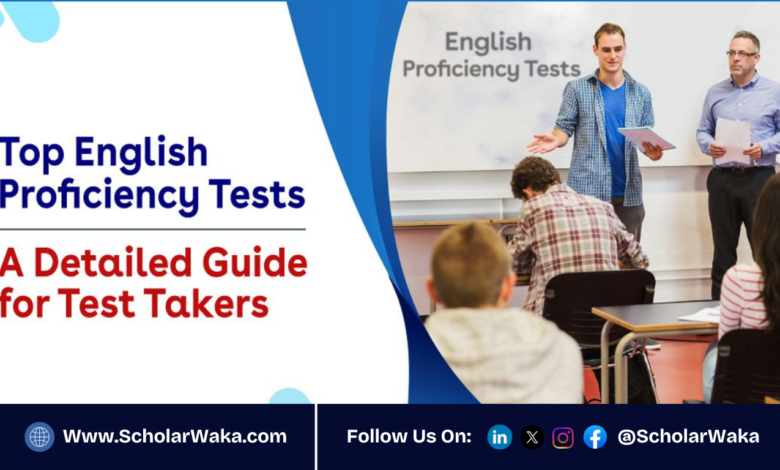
An English Proficiency Language Certificate is an official document proving you can read, write, speak, and understand English at the level required for academic or professional study. If you’re applying for international scholarships or planning to study abroad, you’ll almost always need to prove this — some universities and scholarship providers accept only IELTS or TOEFL specifically, others accept a broader range of options, and a few don’t require a separate certificate at all.
What This Certificate Proves
An English Proficiency Certificate is typically issued after you complete an approved English language test, or when your previous institution formally confirms your education was conducted entirely in English. Universities, scholarship providers, employers, and immigration bodies all use this document to confirm you can genuinely function in an English-speaking academic or professional environment. Most certificates test four core skills: listening, reading, writing, and speaking.
Why It Matters for Your Application
This certificate is often a mandatory requirement for international scholarships and study abroad admissions, and it can directly improve your chances of visa approval for both study and work. International employers frequently request it too, since it demonstrates you can communicate effectively in a professional English-language setting, not just an academic one.

Who Genuinely Needs One
You’ll likely need an English Proficiency Certificate if you’re applying for undergraduate or postgraduate study abroad, pursuing a fully or partially funded scholarship, applying for international jobs or internships, seeking a visa to an English-speaking country, or registering with an international professional body. That said, some applicants qualify for a waiver depending on their academic background — this varies by institution, so never assume you need one without checking the specific requirement first.
Types of English Proficiency Certificates and Where to Get Them
There’s no single certificate accepted universally — different universities and scholarship providers recognise different tests.
- IELTS (International English Language Testing System) — one of the most widely accepted tests globally, delivered through the British Council, IDP IELTS, and other authorised centres. Results are valid for 2 years. One important, current update: IELTS has discontinued paper-based testing worldwide, with the final paper-based test date set for June 27, 2026 — all IELTS testing is now delivered on computer.
- TOEFL (Test of English as a Foreign Language) — particularly favoured by universities in the US and Canada, mainly computer-based through the TOEFL iBT format, available at approved centres or online in some countries. Results are valid for 2 years.
- Duolingo English Test (DET) — an affordable, fully online option taken from home, with growing but not universal acceptance. Results are valid for 2 years. Always confirm your target institution accepts it specifically before choosing it over a more widely recognised test.
- PTE Academic (Pearson Test of English) — a computer-based test widely accepted in the UK, Australia, and Canada, taken at Pearson VUE centres with relatively fast results. Note: sources genuinely disagree on validity here — some state 2 years, others state PTE Academic scores don’t expire at all. Confirm the current validity directly with Pearson or your target institution before relying on an older score.
- Cambridge English Qualifications — internationally recognised exams (B2 First, C1 Advanced, C2 Proficiency) that do not expire, taken at Cambridge-authorised centres. Acceptance still depends on the specific institution, so a lack of expiry doesn’t guarantee universal acceptance.
- English Proficiency Letter (Medium of Instruction / MOI) — a letter from your previous institution confirming your education was conducted entirely in English. Accepted by some universities and scholarship providers, but genuinely not universal — our guide on scholarships without IELTS or TOEFL covers exactly which major scholarships accept this specifically, verified directly against each programme’s own official page.
Which Certificate Should You Choose
The right choice depends on your destination country, the specific university or scholarship’s stated requirement, your budget, and whether you prefer an online test or an in-person test centre. Always confirm the accepted test directly on the official application page before registering for any exam — registering for the wrong test wastes both time and real money.
Can You Apply Without One?
Yes, in some cases. You may be exempt if you studied in an English-speaking country, your prior education was conducted entirely in English, the university grants a specific language waiver, or you’re admitted conditionally pending later proof. Exemptions vary significantly by institution and even by specific programme — our guide on scholarships without IELTS or TOEFL verifies exactly how six major scholarships handle this, directly against their own official sources, since assumptions here can cost you real time on a rejected application.
Frequently Asked Questions
How long is an IELTS or TOEFL certificate valid?
Both are valid for 2 years from the test date. After that, the result is considered expired and generally won’t be accepted for a new application.
Does a Cambridge English Qualification expire?
No. Cambridge certificates (B2 First, C1 Advanced, C2 Proficiency) don’t expire, though individual institutions may still request a more recent result depending on their own policy.
Can I use a Medium of Instruction (MOI) letter instead of IELTS or TOEFL?
Sometimes, depending on the specific institution or scholarship. It’s not universally accepted, so always confirm directly with your target programme before relying on it instead of a standardised test.
Is the Duolingo English Test accepted everywhere?
No. It’s gained wide but not universal acceptance. Always confirm your specific target university or scholarship accepts it before choosing it over IELTS or TOEFL.
Can I take an IELTS paper-based test in 2026?
No. IELTS discontinued paper-based testing globally, with the final paper test date set for June 27, 2026. All IELTS testing is now delivered on a computer.
Disclaimer: English proficiency certificate requirements and validity periods in this guide were compiled from consistent, cross-verified reporting as of mid-2026. Requirements vary by institution and change over time — always confirm current acceptance and validity directly with your target university, scholarship provider, or the testing body itself.
Join ScholarWaka Community
Get the latest scholarship updates and study abroad opportunities before anyone else.