Reach Oxford Scholarship 2026 For Undergraduates | Fully Funded

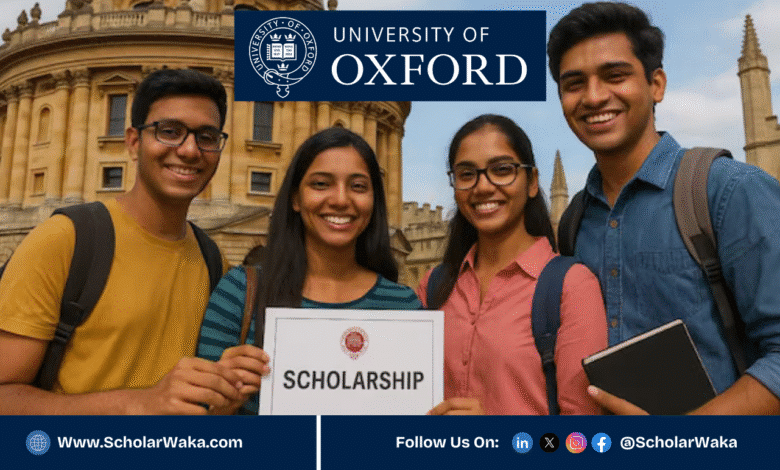
The Reach Oxford Scholarship funds a full undergraduate degree at the University of Oxford for exceptional students from low-income countries who can’t pursue equivalent higher education at home for financial, political, or educational-access reasons. Applications for 2026 entry have closed, and — this is worth knowing directly — Oxford has confirmed that details for 2027 entry won’t be published on the official Reach Oxford page until January 2027.
Also, Check Out: Top Fully Funded Master’s Scholarships in Europe
There’s genuinely nothing to apply for right now, and checking back before January 2027 won’t turn up new information. This guide covers exactly who qualifies, what the scholarship covers, and the specific two-stage process you’ll need to follow once the 2027 cycle opens, so you can prepare properly in the meantime.
Don’t Miss: Top Fully Funded Scholarships for International Students
Understanding Who “Developing Countries” Actually Means
This is worth being precise about, since it’s the detail most guides get loosely right rather than exactly right. Reach Oxford eligibility isn’t based on a general sense of which countries count as “developing” — it’s tied specifically to the nationality of a country on the OECD’s Development Assistance Committee (DAC) list, an official, defined list used to determine eligibility for international development funding.
Also Read: How to Write a Personal Statement for Scholarship | Tips and Free Template
Oxford’s own page names countries across Africa, Asia, the Middle East, Latin America, and the Caribbean, with South Sudan explicitly confirmed among them — but the actual, current list should be checked directly on Oxford’s official page when the 2027 cycle opens, since DAC list membership can shift between years. Beyond the country-eligibility detail, it’s worth understanding this scholarship’s actual structure: not every Oxford college participates in Reach Oxford every year. If you win the scholarship but your specific college doesn’t participate that cycle, you may be transferred to a college that does — a detail worth knowing so it doesn’t come as a surprise partway through the process.
Reach Oxford Scholarship Summary
| Scholarship Name ⇒ | Reach Oxford |
| Host Country ⇒ | UK |
| Study Level ⇒ | Undergraduate |
| Benefits ⇒ | Full course and college fees, living expenses grant, one return airfare per year |
| Funded by ⇒ | University of Oxford, through participating colleges |
| Eligible Countries ⇒ | Nationals of countries on the OECD’s Development Assistance Committee (DAC) list — check Oxford’s official page for the current list |
| Application Deadline ⇒ | 2026 entry closed. Details for 2027 entry will be published on Oxford’s official Reach Oxford page in January 2027 — not available yet |
What the Scholarship Provides
- Full coverage of course and college fees, for the entire duration of your undergraduate degree — 3 or 4 years, depending on your specific course length.
- A grant for living expenses, provided annually throughout your studies.
- One return airfare per year, between the UK and your home country — a detail that matters significantly for students whose families couldn’t otherwise afford annual travel home during study breaks.
- Access to Oxford’s academic community, mentorship, and career development resources, alongside the degree itself.
- Annual renewal, contingent on maintaining satisfactory academic progress — this isn’t a guaranteed multi-year award regardless of performance, but a renewable one tied to your continued progress each year.
Scholars are also expected to write an annual report on their academic and social activities and achievements at the University — a genuine ongoing obligation tied to holding the scholarship, not just a formality at the start.
Who Can Apply
- You must be a national of a country on the OECD’s Development Assistance Committee list, spanning parts of Africa, Asia, the Middle East, Latin America, and the Caribbean — check Oxford’s current official list rather than assuming based on general economic development status.
- You need to receive an offer of admission to an undergraduate course at Oxford through UCAS first — you cannot apply for the Reach Oxford Scholarship without already holding an offer. This is the single most important structural fact about this scholarship: it’s a two-stage process, not one combined application.
- You need to be applying for your first undergraduate degree — this scholarship isn’t available to those who already hold an undergraduate qualification and are seeking a second one.
- All subjects except Medicine are eligible, based on the pasted content’s course guidance — confirm this specific exclusion against the current cycle’s official terms when they’re published.
- You need to demonstrate strong academic ability and genuine potential to succeed at one of the world’s most competitive universities — Oxford’s admission process itself is highly selective before the scholarship layer is even considered.
- You need to commit to returning to your home country after your studies, using your education to make a meaningful impact there — this is assessed directly as part of the scholarship’s selection criteria, not simply implied.

Documents You’ll Need — Once the Cycle Opens
The Reach Oxford Scholarship (formerly the Oxford Student Scholarship) provides full funding for undergraduate candidates from Official Development Assistance (ODA) recipient countries.
Because scholarship applications only open after an applicant receives an offer of admission from the University of Oxford, candidates must maintain a multi-stage document pipeline. All files submitted to the official Oxford scholarship portal must be clear, high-resolution PDFs.
1. University of Oxford Undergraduate Offer Letter:
- Requirement: Official letter or portal notification confirming a conditional or unconditional offer of admission for a full-time undergraduate course (excluding Medicine).
- College Transfer Notice: If your admitting Oxford college does not participate in the Reach scheme during your entry cycle, the university automatically facilitates a college transfer if awarded.
2. Complete Academic Transcripts & Certificates:
- Secondary School Qualifications: High-resolution scans of your secondary school-leaving results (e.g., A-Levels, IB Diploma, WAEC, KCSE, or national equivalents).
- Academic Rigor: Must display top-percentile academic standing, backed by official grading scale keys and certified English translations where applicable.
3. Structured Supporting Statement / Motivation Letter:
Core Essay Themes:
- Academic & Leadership Goals: Outlining how your chosen Oxford undergraduate degree connects to your broader career trajectory.
- Financial Context: Honest, detailed narrative explaining why studying in your home country is unfeasible due to financial constraints or a lack of equivalent educational facilities.
- Commitment to Return & Re-Integration: Concrete plans demonstrating how you will return to your home country post-graduation to apply your skills in government, local development, policy, or social enterprise.
4. Comprehensive Financial Need Evidence:
- Verification: Detailed income documentation to back up your claim of financial hardship.
- Accepted Supporting Files: Parent/guardian tax returns, official wage statements, bank statements, or official government income certificates proving limited household wealth.
5. Social Commitment & Community Evidence:
Documentation: Evidence confirming your active participation in community service, voluntary work, youth leadership, or social advocacy initiatives.
6. Two Confidential Academic & Character References:
- Referees: Written endorsements from secondary school headteachers, academic tutors, or mentors.
- Focus: Must attest directly to your intellectual curiosity, academic perseverance, social commitment, and personal integrity.
7. Valid International Passport / National Identification:
- Identification Standard: High-resolution scan of the biographical data page of your valid international passport.
- Purpose: Verifies your legal nationality, age, and status as a citizen of a DAC/OECD-recognized ODA country.
How to Apply — The Two-Stage Process
- Apply to Oxford through UCAS first, by the university’s standard undergraduate deadline — historically mid-October, though confirm the exact date for the cycle you’re applying in. This is a completely separate process from the scholarship itself, and you cannot skip to the scholarship stage without going through standard Oxford admissions first.
- Go through Oxford’s full admissions assessment, including any required admissions test, written work, and interview for your specific course — this is Oxford’s standard, highly competitive undergraduate process, independent of the scholarship.
- Only once you hold an offer of admission can you access the separate Reach Oxford Scholarship application — this typically opens in mid-January, with the scholarship-specific deadline falling in early February.
- Complete the Reach Oxford application form, reviewing the guidance notes carefully and answering the scholarship-specific questions around financial need, why you can’t study in your home country, and your plans to use your education there.
- Submit before the stated deadline — historically 12 noon UK time in early February. Late or incomplete applications aren’t considered.
- Wait for the selection process, historically conducted in the following March or April, with outcomes communicated by May.
Frequently Asked Questions
Is the Reach Oxford Scholarship currently open for applications?
No. 2026 entry applications are closed, and Oxford has confirmed that details for 2027 entry — including the application process and any updated eligibility — won’t be published on the official Reach Oxford page until January 2027.
Can I apply for the scholarship before I have an Oxford offer?
No. This is a genuinely two-stage process: you must apply to Oxford through UCAS and receive an offer of admission first, before you can even access the separate Reach Oxford Scholarship application.
Does “developing countries” mean any country with a lower income level?
Not quite. Eligibility is tied specifically to the nationality of a country on the OECD’s Development Assistance Committee (DAC) list — a defined, official list rather than a general economic classification. Check Oxford’s current list directly when the next cycle opens.
Is Medicine eligible for this scholarship?
Based on current guidance, Medicine is excluded, though this should be confirmed against the official terms for whichever specific cycle you’re applying in, since course eligibility details are published fresh each year.
What happens if my college doesn’t participate in Reach Oxford that year?
Not every Oxford college participates every year. If you win the scholarship but your specific college isn’t participating that cycle, you may be transferred to a college that is — this is a normal part of how the scheme operates, not a sign something has gone wrong with your application.
Disclaimer: All scholarship details and eligibility criteria in this post were verified from the University of Oxford’s official website as of August 2026. Because details for 2027 entry are not yet published, always check Oxford’s official Reach Oxford page directly from January 2027 onward before applying. ScholarWaka is not affiliated with the University of Oxford.
Official Application Portal
Join ScholarWaka Community
Get the latest scholarship updates and study abroad opportunities before anyone else.